
On this page
Two different lifespans
People usually ask one question, "how long do dental implants last?", but there are two answers, because an implant is two things. The titanium fixture in the bone is one component; the crown, bridge or full-arch prosthesis screwed on top is another. They fail for different reasons and on different timescales.
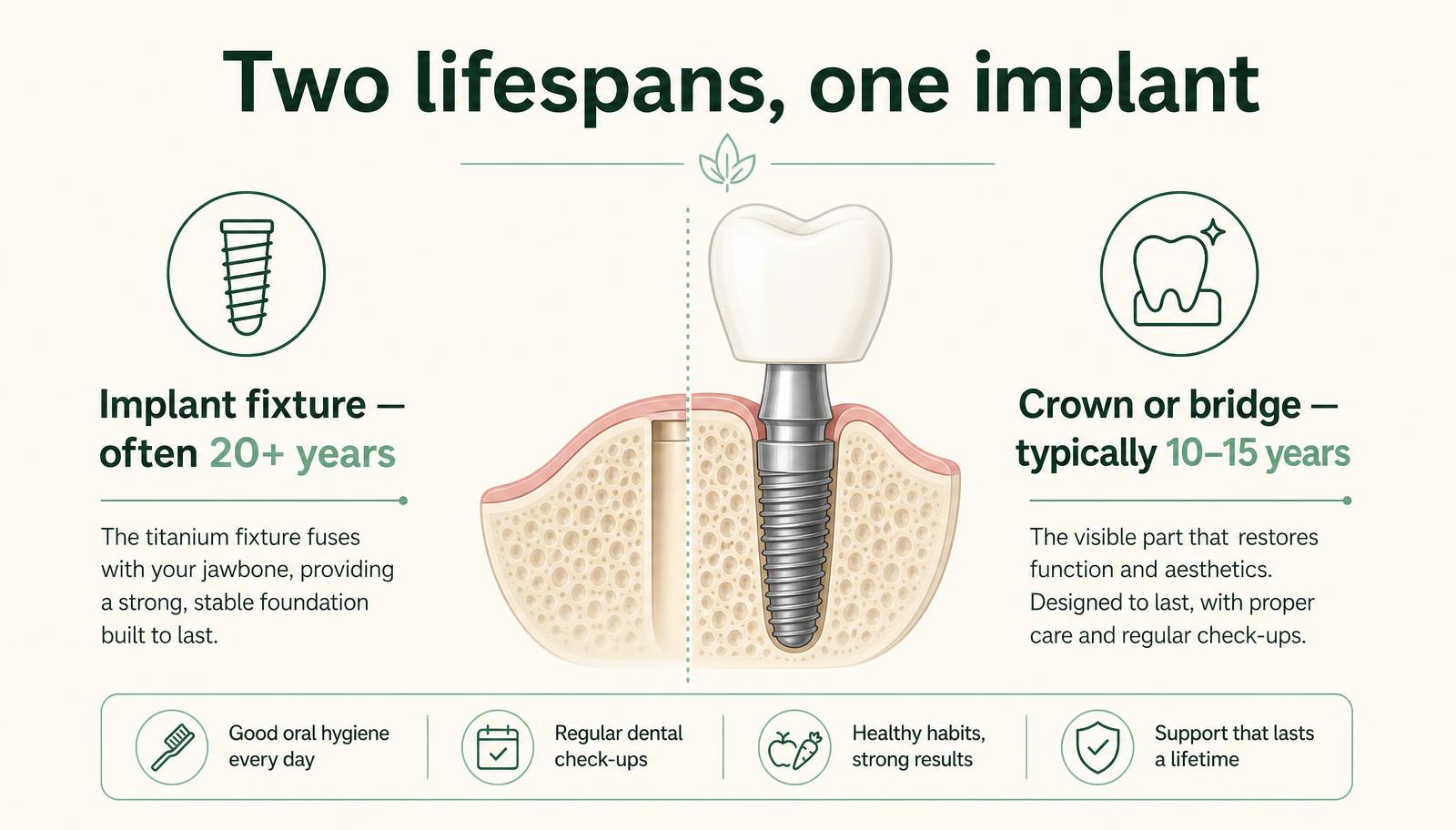
The fixture is a surgical component. Once it has fused with bone it is not consumed by chewing, and in healthy mouths it can stay in place for decades. The restoration on top is a wearing part: porcelain chips, cement seals age, and shades drift as your natural teeth change. Planning for one replacement restoration in your lifetime is realistic; planning to replace the implant itself usually is not.
What the evidence says
Across large long-term reviews, single dental implants show survival around 95% at ten years, with most series still above 90% at fifteen. Full-arch work behaves similarly: All-on-4 and All-on-6 prostheses routinely function beyond ten years, with the bridge, not the implants, being the part most often refreshed.
Two numbers matter and are frequently confused. Survival means the implant is still in the mouth. Success means it is stable, pain-free and surrounded by healthy bone. A clinic quoting a success rate should be able to say which one it is measuring, and over how many years.
What actually shortens implant life
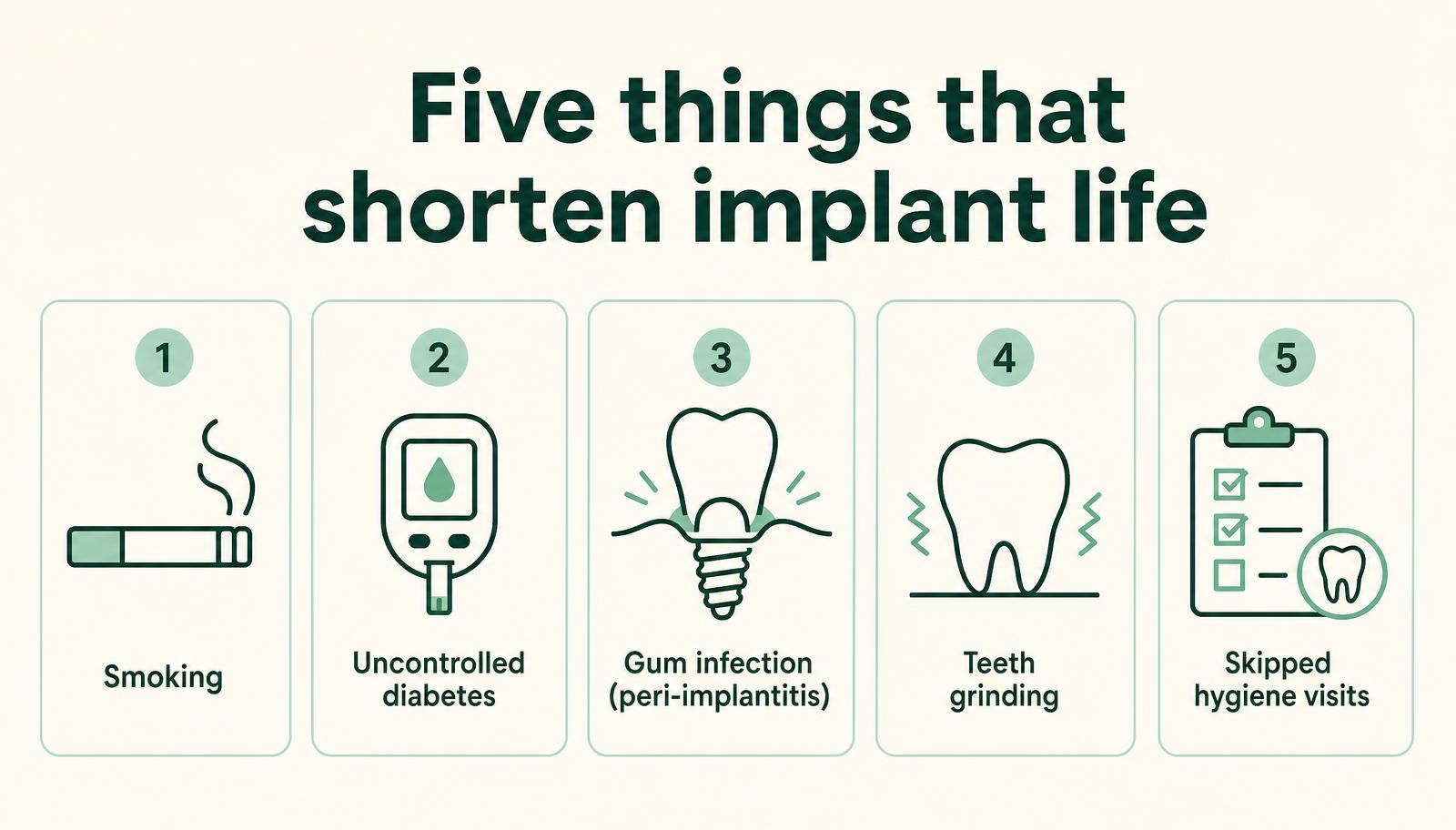
- Smoking. The single strongest modifiable risk factor, roughly doubling failure rates in most datasets.
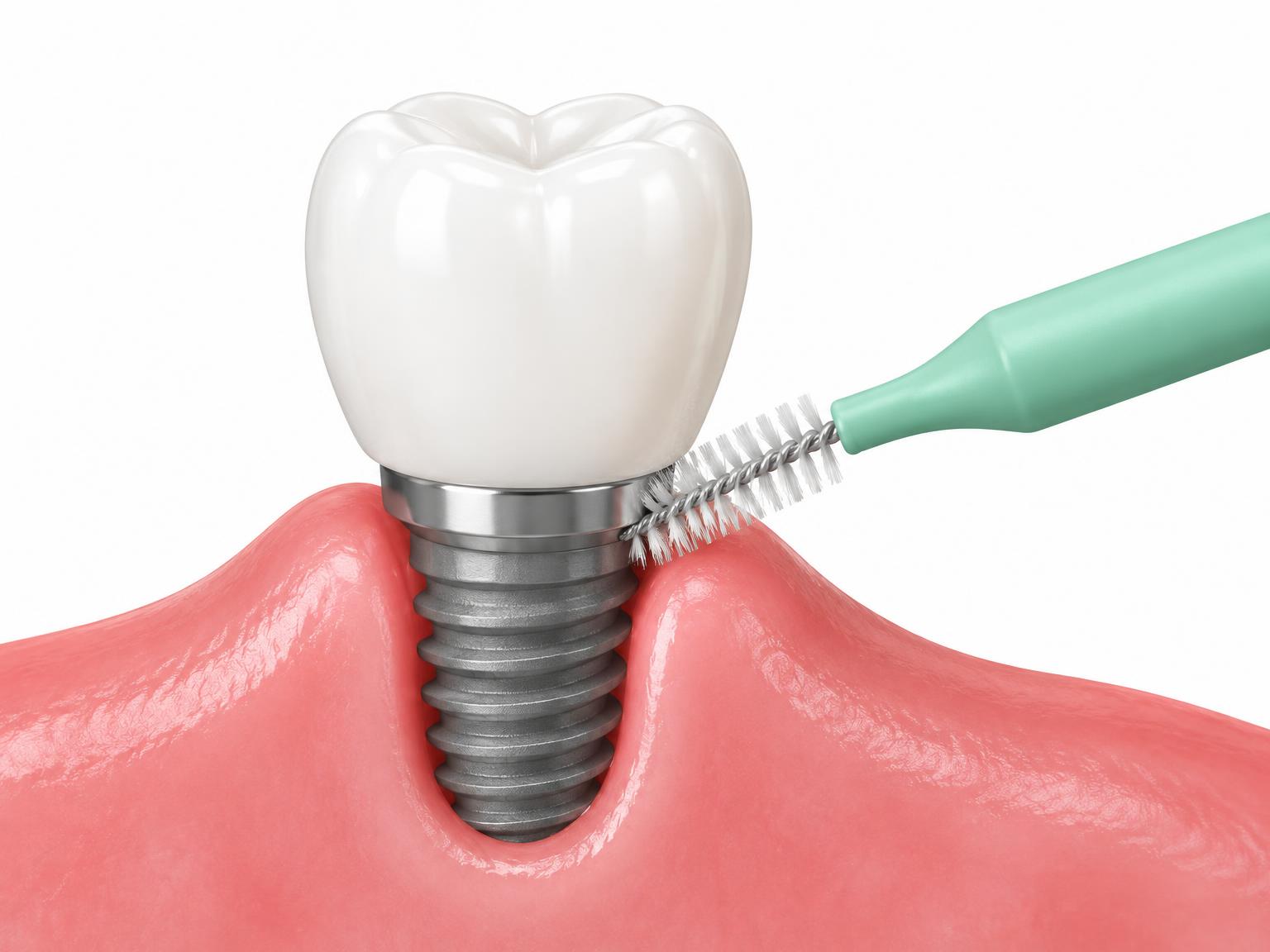
- Peri-implantitis. Bacterial inflammation around the implant that destroys supporting bone. It is treatable when caught early through gum treatment, and hard to reverse when it is not.
- Uncontrolled diabetes and other conditions that impair healing and immune response.
- Grinding and clenching. Implants have no periodontal ligament, so they do not cushion overload. A night guard is cheap insurance.
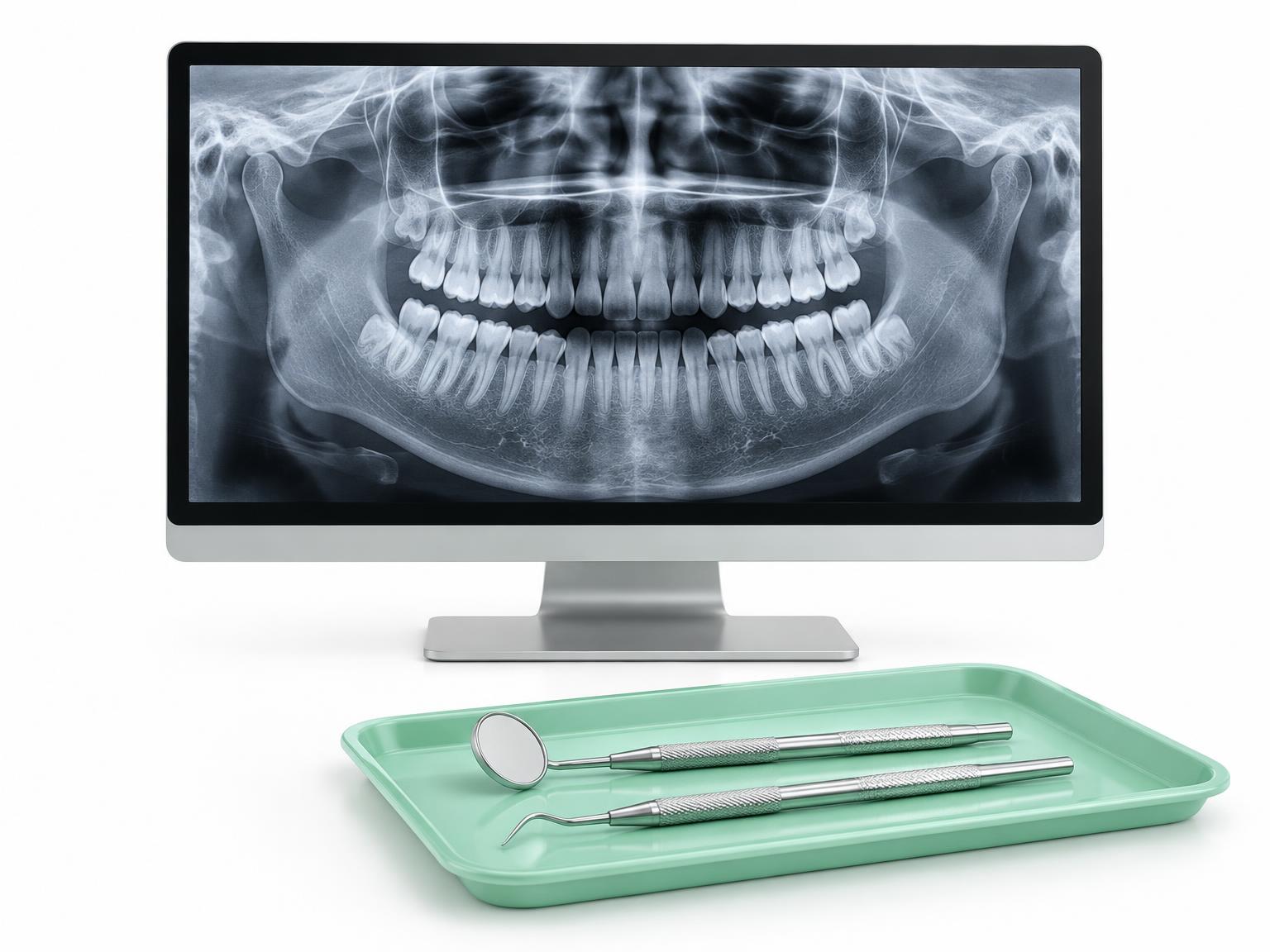
- Skipped reviews. Most late failures are silent for months. Radiographs catch bone loss long before you feel anything.
Full-arch and full-mouth reconstruction
A full-mouth reconstruction ages as a system. Implants integrate and stay put; the prosthesis takes the wear. Acrylic-based bridges typically need refurbishment or teeth replacement earlier, while monolithic zirconia is far more resistant to chipping and is the usual choice for long-term arches. When a bridge is eventually replaced, the existing implants are normally reused, new records are taken, and only the superstructure is remade.
If you are weighing up a full rebuild, the practical questions are covered in the All-on-4 and full-arch guide and on the full mouth restoration page for UK patients. Cases with reduced bone volume may also involve bone grafting or a sinus lift, which changes the timeline but not the long-term outlook once healed.
Materials: titanium, zirconia and what goes on top
Titanium fixtures have the longest track record and remain the default. Zirconia fixtures are metal-free and useful in specific aesthetic or sensitivity cases, with shorter published follow-up. For the visible part, zirconia crowns and bridges outperform metal-ceramic on chipping resistance, while an implant-supported bridge spreads load across fewer fixtures than one implant per tooth. Where a tooth is missing on its own, a single tooth implant preserves the neighbouring teeth in a way a conventional bridge does not, and it outlives most dentures by a wide margin.
The maintenance timetable
| When | What happens | Why it matters |
|---|---|---|
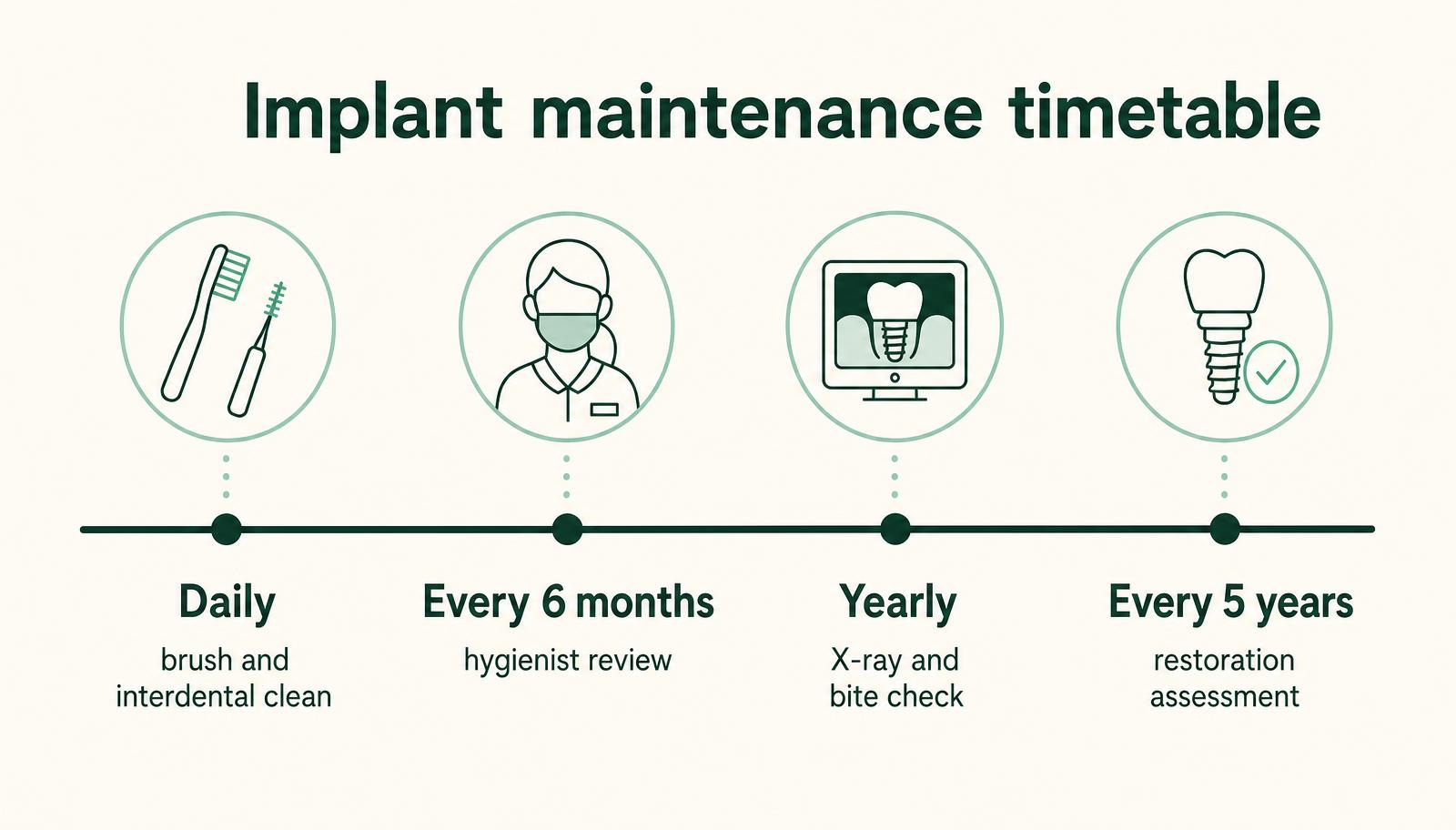
| Daily | Brushing plus interdental brushes or a water flosser | Removes the biofilm that starts peri-implantitis |
| Every 6 months | Hygienist review and professional cleaning | Catches early inflammation while it is reversible |
| Yearly | Radiograph and bite check | Detects silent bone loss and overload |
| Every 5 years | Restoration assessment | Plans crown or bridge renewal before it fails |
Longevity when you are treated abroad
Treatment abroad only makes sense if the aftercare works from home. Before you book, ask for the implant system name and batch labels in writing, a copy of your CBCT and clinical notes, and a written warranty that states what is covered and for how long. Those records let any dentist in the UK service or restore your implants years later, a generic "implant" with no documentation is the most expensive thing in dentistry.
At Dental Oasis Tirana we place internationally documented implant systems, provide full records, and keep reviewing patients remotely between visits. If you are comparing options, the Albania vs UK implant comparison covers timelines and quality, and the implant cost calculator sends a personalised estimate by email. When you are ready to talk it through, book a free consultation.