
On this page
The same idea, two support patterns
Both techniques replace a whole arch of teeth with a fixed bridge screwed onto implants. Neither replaces every tooth with its own implant. The difference is how many posts carry the bridge and where they sit.
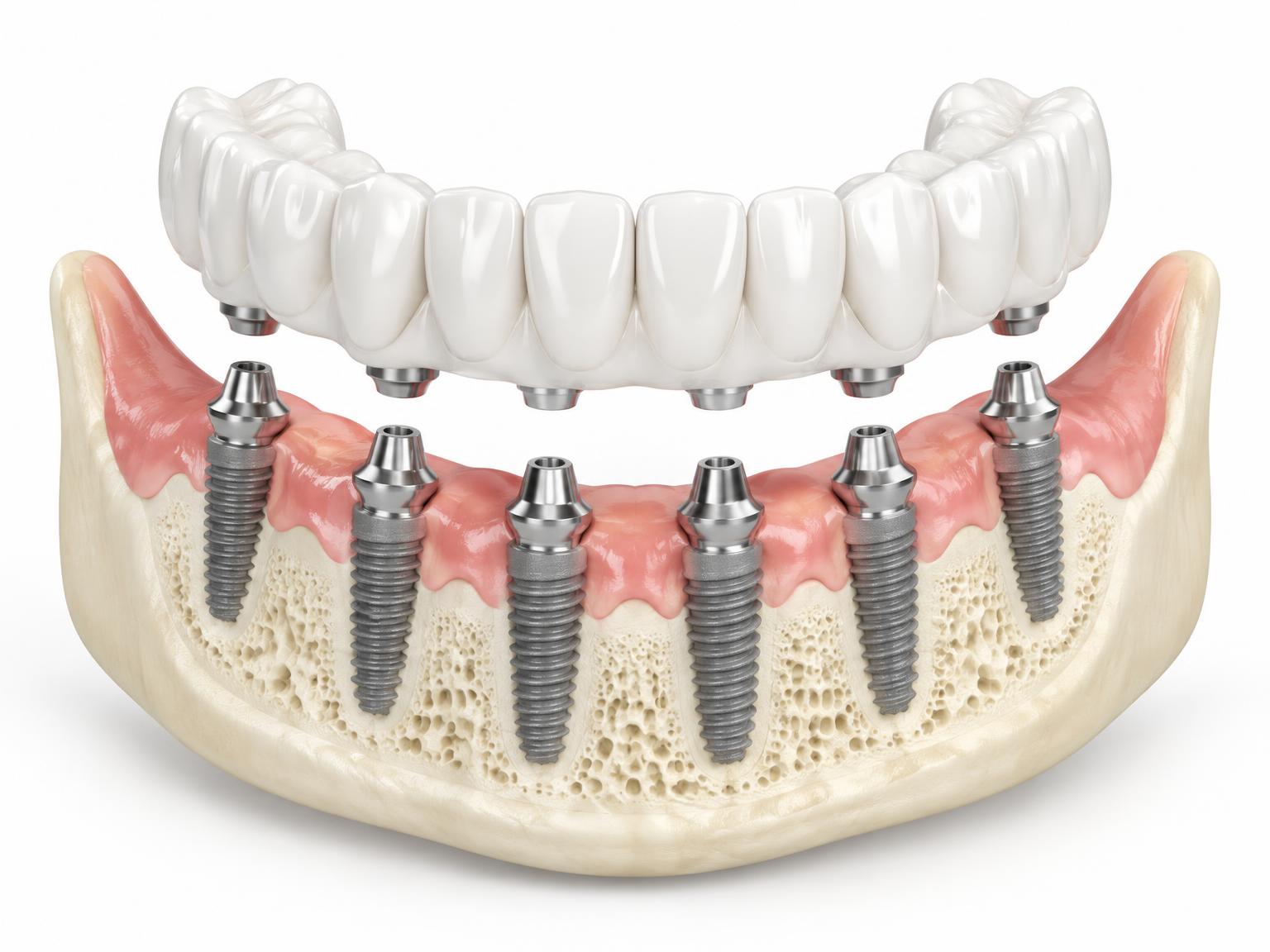
All-on-4 places four implants in the front section of the jaw, where bone is usually thickest, and angles the back two so they reach solid bone without touching the sinus or the nerve. All-on-6 adds two more posts, usually further back, so the bridge is supported along more of its length.
How the two designs differ
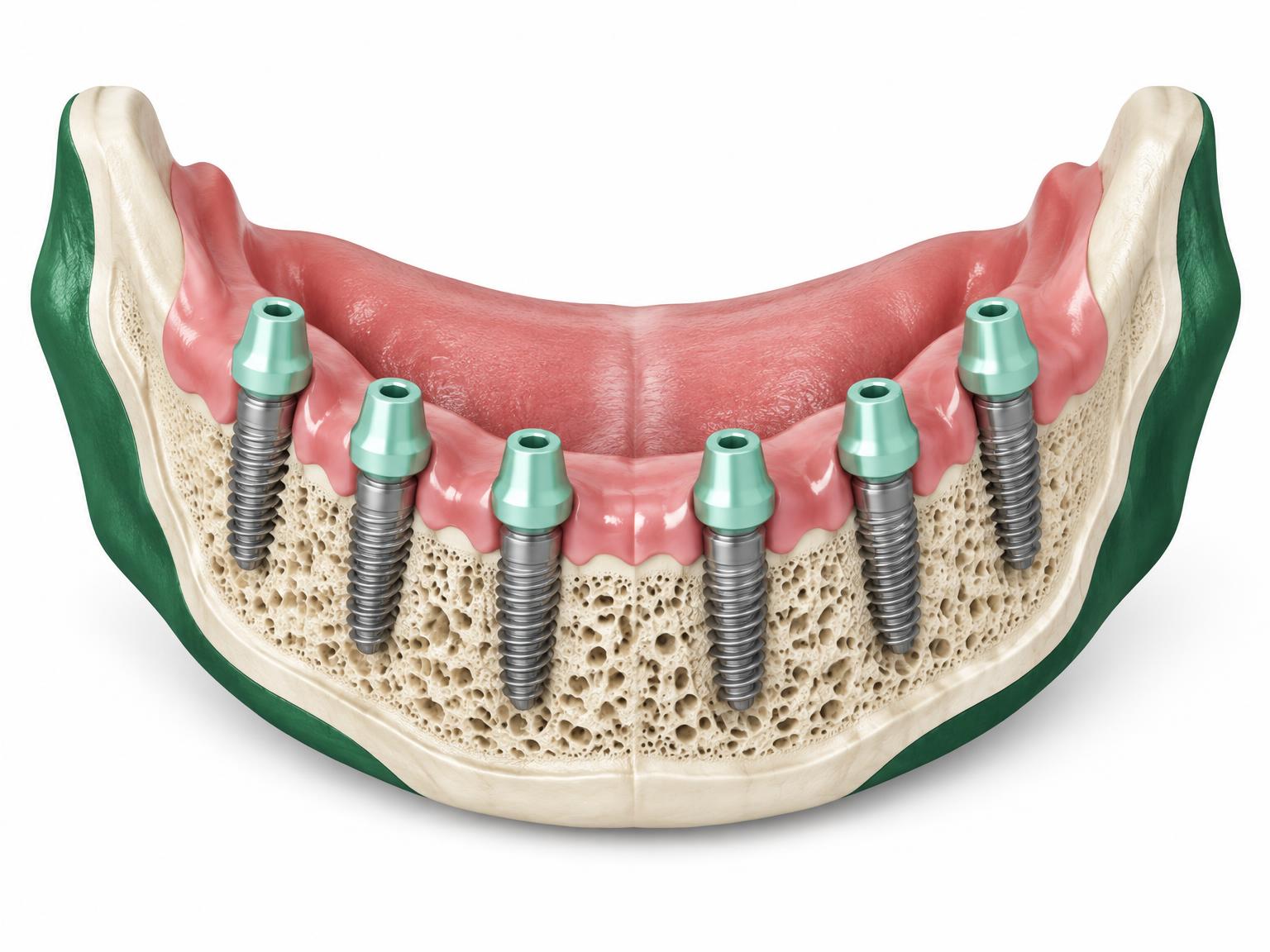
- Bone required. All-on-4 was designed to avoid grafting. All-on-6 usually needs more usable bone in the posterior regions, or a sinus lift to create it.
- Load spread. Six implants shorten the unsupported cantilever at the back of the bridge, which matters for strong bites and heavy grinders.
- Material choice. Longer monolithic zirconia arches generally prefer six points of support; acrylic-on-titanium bridges are more forgiving.
- Failure tolerance. If one implant is lost, a six-implant arch can often be repaired without remaking the whole bridge. A four-implant arch has less margin.
- Surgery and healing. Fewer implants means shorter surgery and, for most patients, a slightly easier recovery.
Which jaw you are treating matters
Upper jaws have softer bone and the sinus above them, so upper arches are the ones where six implants are proposed most often. Lower jaws have denser bone at the front, and All-on-4 in the lower arch has the longest published track record of the two.
This is why a plan quoting the same design for both jaws deserves a question. Most patients with two arches to restore end up with different configurations top and bottom.
Timeline, either way
The clinical sequence is similar. A CBCT scan and planning appointment, surgery with immediate placement of a fixed temporary bridge the same day where stability allows, three to six months of healing, then the definitive bridge. Practically, that means two trips to Tirana with normal life in between, see the same-day teeth page for how the immediate bridge works.
Who All-on-6 is designed for
Six implants are usually proposed when at least one of these applies:
- An upper arch. Softer bone and the sinus make extra support more valuable at the top.
- A strong bite or grinding. More posts shorten the back of the bridge that would otherwise flex under load.
- A long zirconia bridge. Rigid materials last best when they are supported at more points.
- Long-term security. Patients who want a margin for repair if one implant ever has problems.
It is not the right choice when the back of the jaw has too little bone and a graft would add months and risk for little gain. In that case a well-planned All-on-4 is the better treatment, not a compromise.
What six implants mean for you
Surgery takes a little longer per arch and swelling can be slightly greater for the first few days. Cleaning is the same routine as any fixed arch: a water flosser and superfloss under the bridge daily, and a professional check every six months. Over the years the extra implants give the dentist more options if something needs adjusting. The All-on-6 treatment page sets out the two-trip plan step by step.
Your treatment journey, step by step
- Photos or a panoramic X-ray on WhatsApp. We tell you honestly whether a full arch looks realistic and whether four or six implants are likely. Cost driver: none yet, this step is free.
- CBCT scan and planning in Tirana. The 3D scan confirms bone volume and decides the final number of implants. Cost driver: whether bone grafting or a sinus lift is needed.
- Surgery day. Extractions, implant placement and, where stability allows, a fixed temporary bridge the same day. Cost driver: the number of implants and extractions.
- Review before you fly home. We check healing and the bite and give written aftercare.
- Healing at home, three to six months. Normal life on a soft diet, with WhatsApp check-ins.
- Second trip: the definitive bridge. Cost driver: the bridge material, for example monolithic zirconia or a titanium-reinforced hybrid.
You receive a written, costed plan privately before anything starts, so there are no surprises on the day. See how the same-day teeth stage works in detail.
Choosing without guessing
Ask for the CBCT to be shown to you, with the bone volume at the back of the jaw pointed out. Ask what the cantilever length would be with four implants. Ask what the plan is if one implant does not integrate. A clinic that answers those three questions clearly is planning your case; a clinic that answers with a package name is not.
If you are still deciding between a fixed arch and other options, how long implants last covers the maintenance side of both designs.