
On this page
Introduction
When people research veneers abroad, two names come up again and again: E.max and zirconia. Both are high quality ceramics, both are milled or pressed in a dental laboratory, and both can look excellent. They are not interchangeable, though. Each one has a job it does best, and a careful plan puts the right material on the right tooth.
TLDR;
- E.max is a glass ceramic made by Ivoclar. It is translucent, can be very thin and bonds strongly to enamel.
- Zirconia is roughly twice as strong but more opaque, and it bonds less predictably as a thin shell.
- For healthy or lightly stained front teeth, E.max veneers usually look the most natural.
- For very dark teeth, heavy grinding or teeth that need full coverage, zirconia or a zirconia crown is often the safer choice.
- The material is chosen tooth by tooth after an examination, photos and a digital smile design.
- We do not publish treatment prices. After a consultation you receive a written plan by email.
What each material actually is
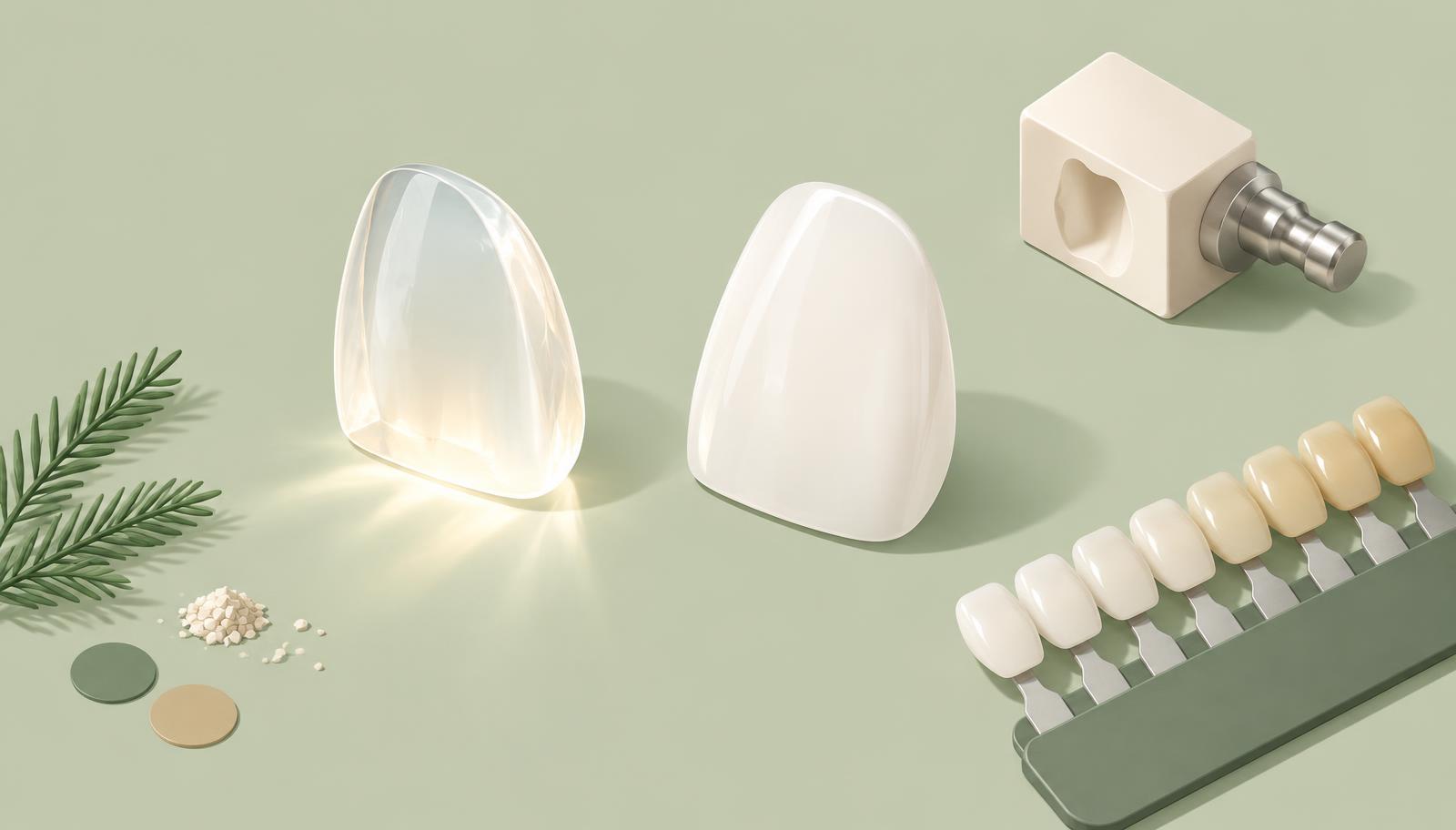
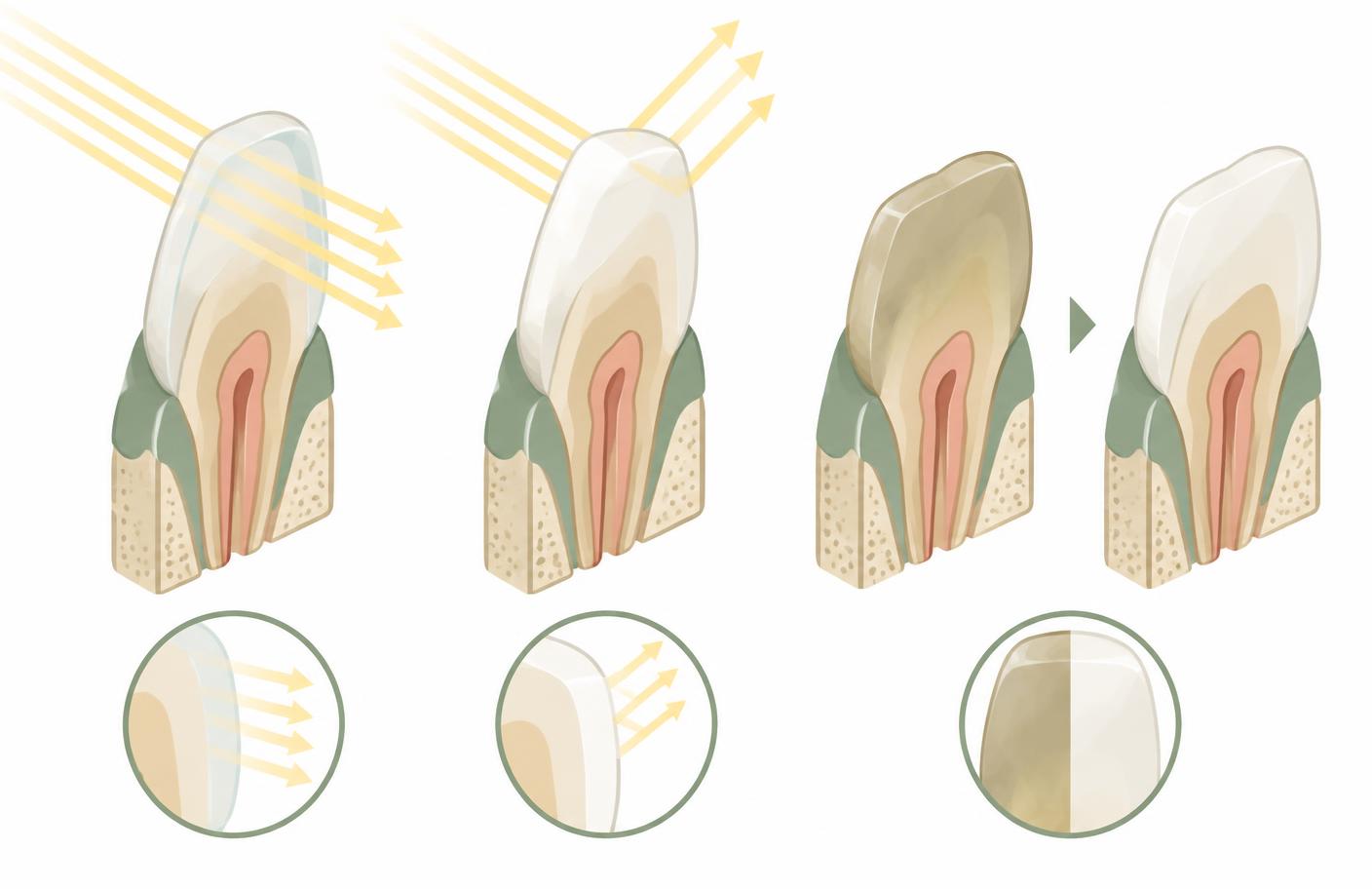
E.max is the brand name of Ivoclar's lithium disilicate glass ceramic. Because it contains glass, light passes into it a little way before it reflects back, which is how natural enamel behaves. The surface can be etched and bonded directly to enamel, which lets the laboratory make veneers as thin as a few tenths of a millimetre.
Zirconia is a polycrystalline ceramic with no glass phase. It is extremely tough, which is why it became the standard for crowns and bridges on back teeth. Newer translucent zirconias look much better than the chalky early versions, but they are still more opaque than E.max and usually need a little more thickness to look right.
Side by side
| Factor | E.max veneers | Zirconia veneers |
|---|---|---|
| Look | Translucent, lifelike depth | More opaque, brighter, can look flat on thin shells |
| Strength | High, more than enough for front teeth | Very high, suits heavy bite forces |
| Thickness needed | Can be very thin, often minimal preparation | Usually slightly thicker |
| Bonding to the tooth | Etched glass ceramic, very strong and predictable | Needs special primers, less predictable for thin veneers |
| Hiding dark teeth | Good for mild staining, limited on very dark teeth | Very good at masking discolouration |
| Repair | Small chips can sometimes be polished or bonded | Chips are rare; repair is harder |
| Typical role | Veneers and front crowns | Crowns, bridges, implant work and difficult cases |
When E.max is the better choice
- Your teeth are healthy and you want a natural, bright but believable result.
- You want the least possible removal of enamel. Thin E.max veneers can often be bonded mostly onto enamel.
- You are treating a few front teeth and need them to blend with natural neighbours.
- Your bite is normal and you wear a night guard if you clench.
When zirconia makes more sense
- A tooth is very dark, for example after an old root canal or tetracycline staining, and a translucent veneer would let the colour show through.
- You grind or clench heavily and have already broken fillings or old veneers.
- The tooth needs full coverage anyway, so a crown rather than a veneer is the honest answer. See dental crowns.
- The restoration sits on an implant or is part of a bridge.
Why many smiles use both
A common plan is E.max veneers on the visible front teeth and zirconia crowns on a back tooth or a dark, heavily filled tooth. The laboratory matches shade and surface texture across both materials, so the smile reads as one piece. Choosing one material for every tooth for the sake of simplicity is usually a sign that the plan was not built tooth by tooth.
Questions to ask any clinic
- Which ceramic do you recommend for each tooth, and why?
- How much enamel will you remove, and will the veneers be bonded to enamel?
- Will I see a digital smile design and a trial smile before any preparation?
- Is the laboratory in house or local, and who checks the shade?
- What guarantee applies, and what happens if a veneer chips after I fly home?
How we plan veneers in Tirana
At our boutique clinic in Tirana, Dr. Irma and the prosthodontic team review photos, X-rays and a scan before recommending any ceramic. You see a digital design and a trial smile in your mouth before a tooth is touched. Veneers usually take two visits about a week apart, with the laboratory working in between. You can read the wider comparison in our guide to veneers in Albania vs the UK, and if you are weighing a lighter option, see composite bonding: pros and cons.
What it costs
Albanian guidelines do not allow clinics to publish treatment prices. The material matters less to your total than the number of teeth and whether other work is needed first. After a free consultation we email you a written, itemised plan. You can start with a private estimate or a free consultation.