
On this page
Introduction
Composite bonding is the most requested cosmetic treatment among patients who want a visible change without altering the tooth underneath. This article explains what bonding realistically delivers, where its limits are, and how having it done in Tirana compares with private care in the UK. The aim is an impartial picture, including the cases where travelling abroad is the wrong call.
TLDR;
- Typical saving in the Albanian market is 55–70% against UK private fees.
- Treatment finishes in one to two visits, no lab wait and usually no drilling.
- Composite is repairable and reversible, unlike porcelain veneers.
- Expect four to eight years of life, versus ten to fifteen for porcelain.
- It stains from coffee, tea, red wine and smoking more than ceramic does.
- For two to four teeth the net saving after travel is often negligible.
What composite bonding actually is
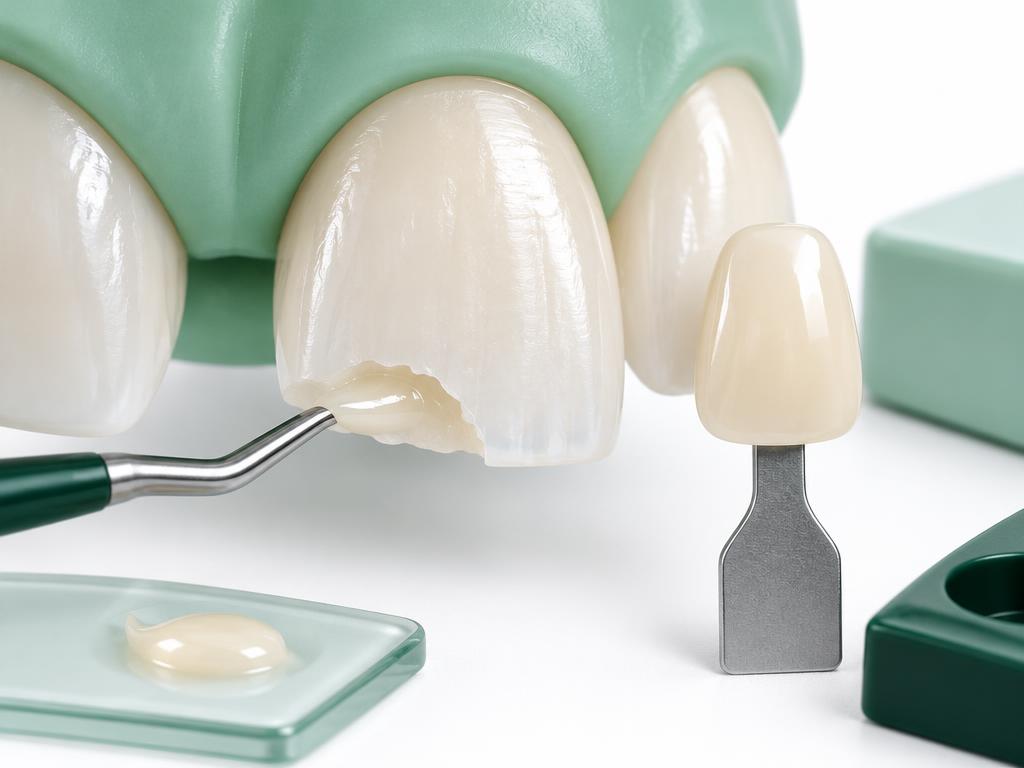
The dentist lightly roughens the enamel surface, applies a bonding agent, then sculpts layers of tooth-coloured resin and cures them with a light. Shape, length and shade are created directly in the mouth, with nothing sent to a laboratory. That is why the whole treatment finishes in one appointment and you leave with the final result.
The benefits
- Conservative. In most cases no tooth structure is removed, so it stays reversible.
- Fast. Two to six teeth are completed in one to three hours.
- Repairable. A chipped edge is patched with more composite, not redone from scratch.
- Lower cost. It is the cheapest cosmetic option in any market.
- Ideal for small changes. Gaps, chipped edges, uneven shapes, worn incisal edges.
The drawbacks, stated plainly
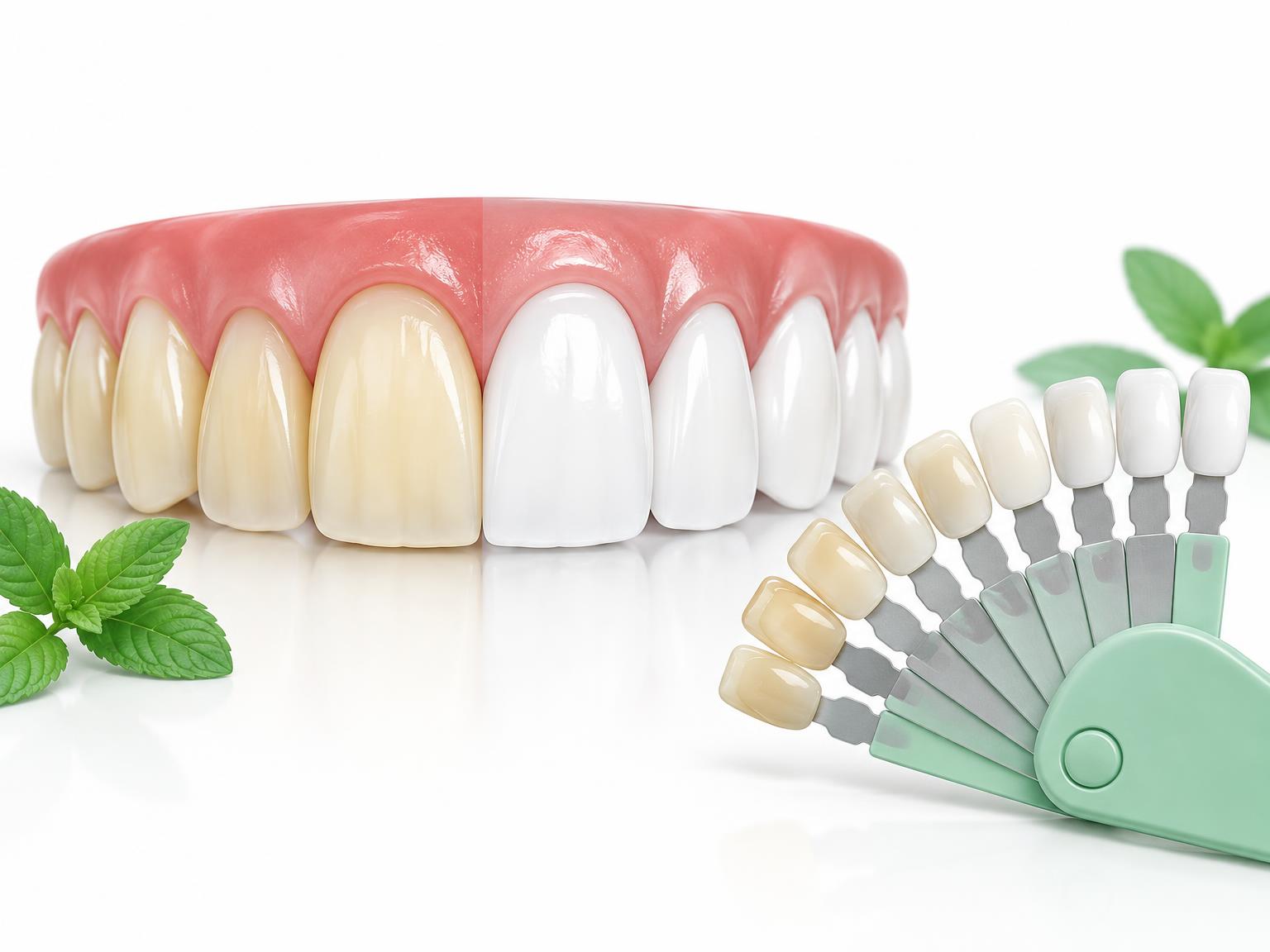
- It stains. Resin absorbs pigment; after two to three years it can read differently to adjacent enamel.
- It chips. Grinding or a deep bite damages composite more easily than ceramic.
- Shorter lifespan. Four to eight years, with repolishing every twelve to eighteen months.
- Highly operator-dependent. There is no lab to correct the work; everything is shaped chairside.
- It will not fix large problems. Heavy tetracycline staining or significant misalignment needs veneers or orthodontics.
How the cost compares
Albanian dental guidelines do not allow clinics to publish treatment prices, so we do not show figures here. In general terms:
- Bonding is the lowest-cost cosmetic option in any market, in Tirana as in the UK.
- The Tirana market level sits well below UK private care for the same number of teeth.
- For two to four teeth, flights and a short stay can cancel out most of the difference.
- For a full smile zone (six to ten teeth), the trip is more likely to be worthwhile.
Send two smile photos and we will email your own costed plan privately.
Composite bonding vs veneers: which suits your case?
Bonding and veneers solve overlapping problems in very different ways. Bonding is resin sculpted directly onto the tooth in a single visit, usually with little or no enamel removal. Veneers are thin ceramic shells made in a laboratory and cemented over the front of the tooth, which normally means some irreversible preparation.
| Factor | Composite bonding | Porcelain veneers |
|---|---|---|
| Visits needed | Usually one | Two, several days apart |
| Enamel removal | Minimal or none | Typically 0.3–0.7 mm |
| Reversible | Largely yes | No |
| Typical lifespan | 4–8 years | 10–15 years or more |
| Stain resistance | Moderate, picks up coffee and tobacco | High, glazed ceramic |
| Repairability | Easy, repaired chairside | A fracture usually means remaking the veneer |
| Relative cost | Lower | Higher |
| Maintenance | Repolish every 12–18 months | Routine hygiene visits |
Bonding is usually the better choice when
- You want to close small gaps, repair chipped edges or reshape uneven teeth.
- Your enamel is healthy and you would rather keep it intact.
- You are young, or still deciding, and want a reversible trial of a new smile shape.
- Your budget matters more than maximum longevity.
Veneers are usually the better choice when
- You want a substantial change in colour that whitening cannot achieve.
- Teeth are heavily worn, misshapen or already have large old fillings on the front surfaces.
- You want the longest-lasting, most stain-resistant result and accept irreversible preparation.
- You have several teeth to treat and want a uniform, laboratory-made finish.
Many cases end up mixed: veneers on the front four teeth and bonding on the neighbours, or bonding first as a preview before committing to ceramics later. That decision should follow an examination and photographs, not an online quote.
When travelling is NOT worth it
- You only need one to three teeth: the net saving disappears after flights.
- You grind your teeth and will not wear a night guard.
- You have active gum disease or decay that must be treated first.
- You cannot return for small refinements within the first six months.
When it does make sense
- Six or more teeth, or bonding combined with hygiene treatment and whitening.
- You are already visiting Albania for family or a holiday.
- You want a reversible alternative before committing to veneers.
What the UK still does better
Continuity of care is the honest advantage of treating at home. A UK practice can see you within days for a chipped edge, your records stay in one place, and complaints route through the GDC. If you treat abroad, plan for maintenance: identify a local dentist willing to repolish or repair composite placed elsewhere, and keep photographs plus the written treatment plan.
How to choose a clinic
Ask to see the clinic''s own before and after photographs, ask which composite system is used, request a written plan after examination, and clarify upfront who covers refinements if something chips after you return home.