
On this page
Introduction
Cosmetic dentistry is not one treatment. It is a group of treatments that change how teeth look, and most of the skill lies in choosing the smallest set that reaches the result you actually want. Albania has become one of the places people travel to for that work, so it helps to know what is on the menu, how a case is planned, and which questions separate a careful clinic from a sales operation.
TLDR;
- Cosmetic dentistry covers whitening, composite bonding, veneers, crowns, clear aligners and gum shaping.
- Gums, decay and failing old work are treated before anything cosmetic starts.
- The least invasive option that still reaches the result is the right one.
- A digital design and a trial smile let you approve the look before any tooth is prepared.
- Two short trips to Tirana cover most cosmetic cases.
- We do not publish treatment prices. After a consultation you receive a written plan by email.
What cosmetic dentistry actually covers
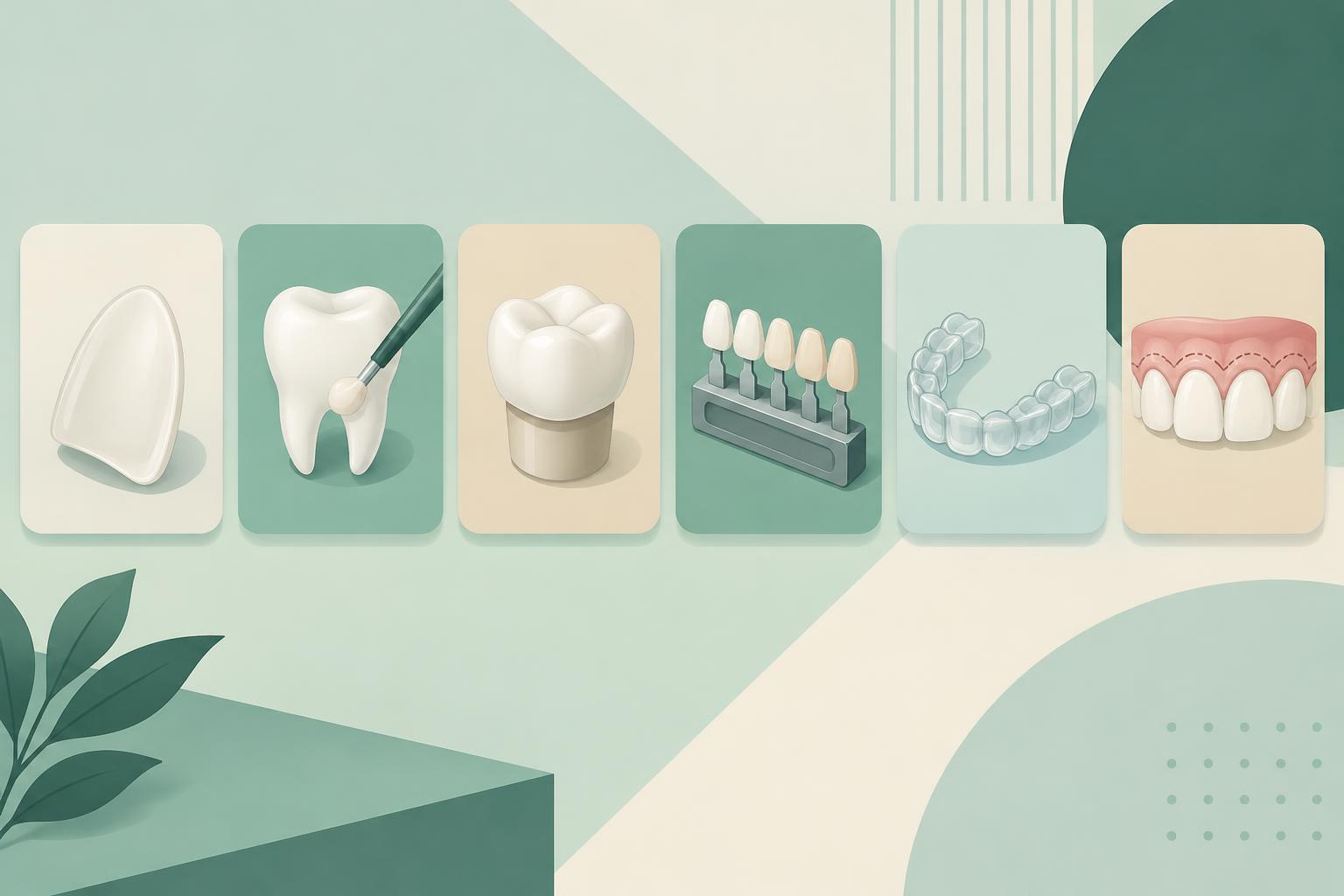
Whitening changes colour only, and it is the least invasive thing we can do. It suits teeth that are healthy but stained. It will not change shape, and it does not lighten existing crowns or fillings. See teeth whitening.
Composite bonding adds tooth coloured material directly, in one visit, without removing much or any enamel. It suits small chips, worn edges and narrow gaps. It stains faster than porcelain and needs polishing every few years. See composite bonding.
Veneers are thin porcelain shells bonded to the front of the tooth. They suit shape, proportion and colour changes that bonding cannot hold. They are not reversible, so they are worth doing only when the plan is right. See porcelain veneers.
Crowns cover the whole tooth and are a restorative answer, not a cosmetic one. They belong on teeth that are heavily filled, cracked or root treated. A healthy tooth should not be crowned for looks. See dental crowns.
Clear aligners move teeth instead of covering them. Straightening first often means fewer veneers afterwards, and sometimes none at all. See clear aligners.
Gum shaping corrects an uneven gum line or teeth that look short because the gum sits low. Often it is the missing step in a smile that otherwise looks fine.
A full smile makeover combines several of these in one plan. See smile makeover and the Hollywood smile page.
How a cosmetic plan is built
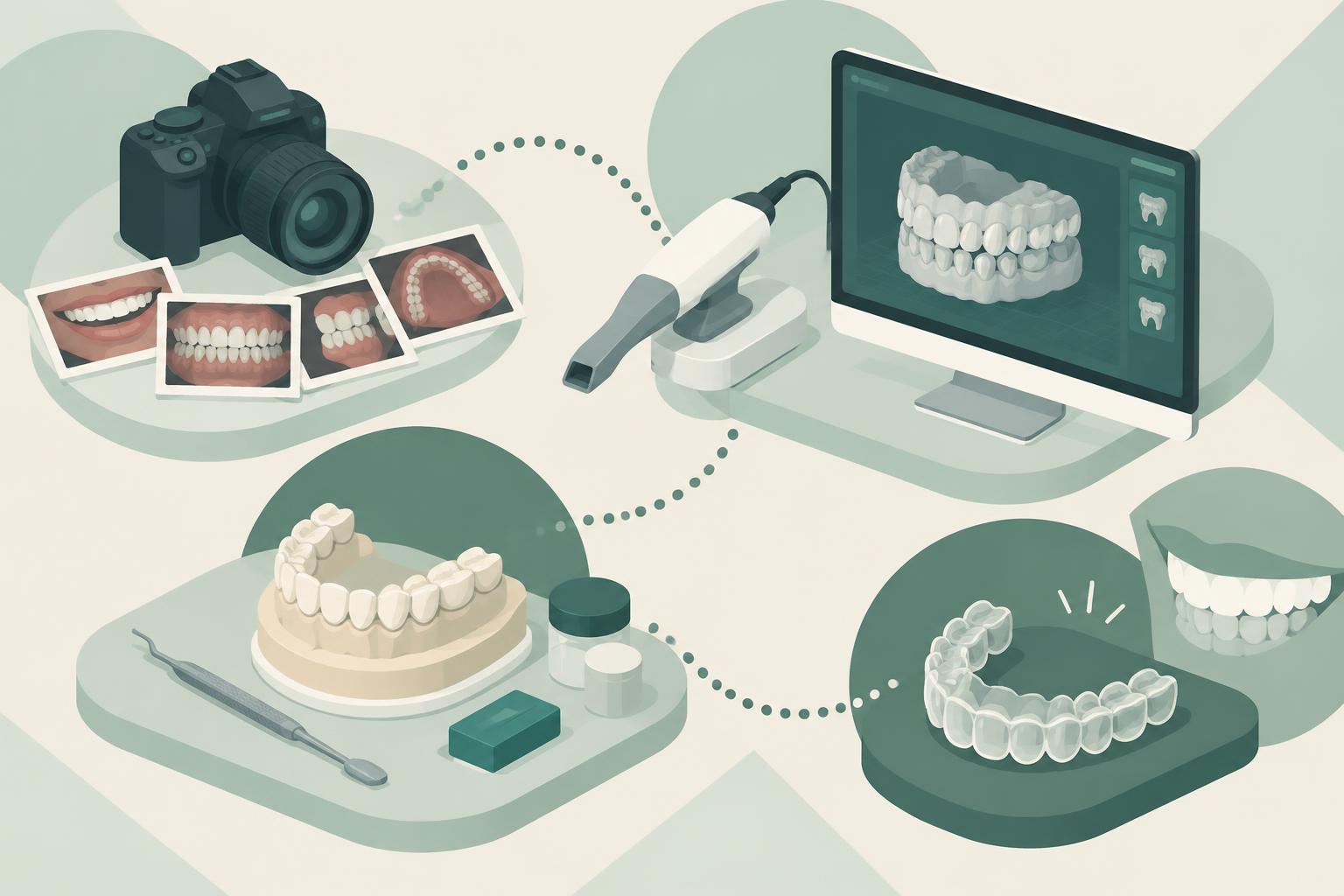
Photographs, X rays, a bite analysis and a gum chart come first. If gums bleed, a tooth is decayed or an old crown is leaking, that is treated before any aesthetics. Ceramics built on an unhealthy foundation fail early, and they fail expensively.
Then the design. Proportions are planned from your face rather than from a catalogue: the midline, how much tooth shows at rest, the curve of the smile against your lower lip. You see the design on screen, and you can change it.
Then the trial smile. A temporary version of the plan is placed over your teeth without preparation. You look at it, photograph it, live with it for a while and say what should change. Nothing irreversible has happened yet, and that is the point.
At Dental Oasis the clinician who plans the case is the one who does it. Software and the laboratory support the plan, they do not replace the person responsible for it.
Albania, the UK and Turkey compared
Against the UK, the main differences are time and continuity. UK cosmetic work is usually spread over many short appointments across months; in Tirana the same sequence is compressed into two visits with longer chair time. Materials are the same brands available anywhere in Europe, named to you in writing before you agree.
Against Turkey, the difference people report most often is volume. Albania is a smaller market, which means smaller clinics, fewer patients per day and direct contact with your own clinician rather than a coordinator. Ask any clinic in any country how many teeth they plan to treat and why. A plan that prepares twenty healthy teeth because it looks quicker is a warning, wherever it is offered.
Cost is real, and it is also the part most often used to rush people. Albanian guidelines do not allow us to publish treatment prices, and a public price would be a guess about your mouth in any case. What you get instead is a written plan, itemised, sent to you privately.
What the trip looks like
A typical cosmetic case is two visits. The first is three to five days: assessment, planning, preparation and temporaries. You go home with a working temporary smile. Three to four weeks later the second visit takes two to three days for try in, adjustment and final bonding. Simple cases, such as bonding or whitening alone, finish in one short visit.
Between visits we stay in contact, and after treatment you have written aftercare plus a review schedule you can keep with your dentist at home.
Questions to ask any clinic abroad
- Which clinician plans my case, and will that same person treat me?
- How many teeth do you plan to touch, and why each one?
- Which materials and brands, in writing?
- What happens if something needs adjusting after I fly home, and who pays?
- Can I see the design and a trial smile before anything is prepared?
- What is the warranty, and what voids it?
If the answers arrive as a price and a photograph of somebody else, that is your answer.
Aftercare at home
Porcelain and composite last longer with boring habits: a soft brush, floss or interdental brushes, a night guard if you grind, and hygiene visits twice a year. Composite needs repolishing every few years. Veneers and crowns need the gum around them kept healthy, which is where most long term problems start.
Ready to plan? Book a free consultation with photographs, and we send a written plan with costs by email. No prices are published here, and nothing is decided in a hurry.