
On this page
Introduction
The difference between a smile that looks made and a smile that looks yours is decided long before the ceramic is ordered. It is decided in planning.
TLDR;
- Health first: gum disease, decay and failing old work are treated before aesthetics.
- Digital smile design maps tooth proportions to your face and lip line.
- A wax-up and a trial smile let you approve the shape in your own mouth.
- Aligners or whitening often reduce how many veneers are needed.
- Most makeovers run over two trips to Tirana, a few weeks apart.
Step one: the assessment
Photographs, X-rays, a bite analysis and a periodontal chart. If your gums bleed or an old crown is leaking, that is treated first. Building ceramics onto an unhealthy foundation is how expensive work fails in three years.
Step two: the design
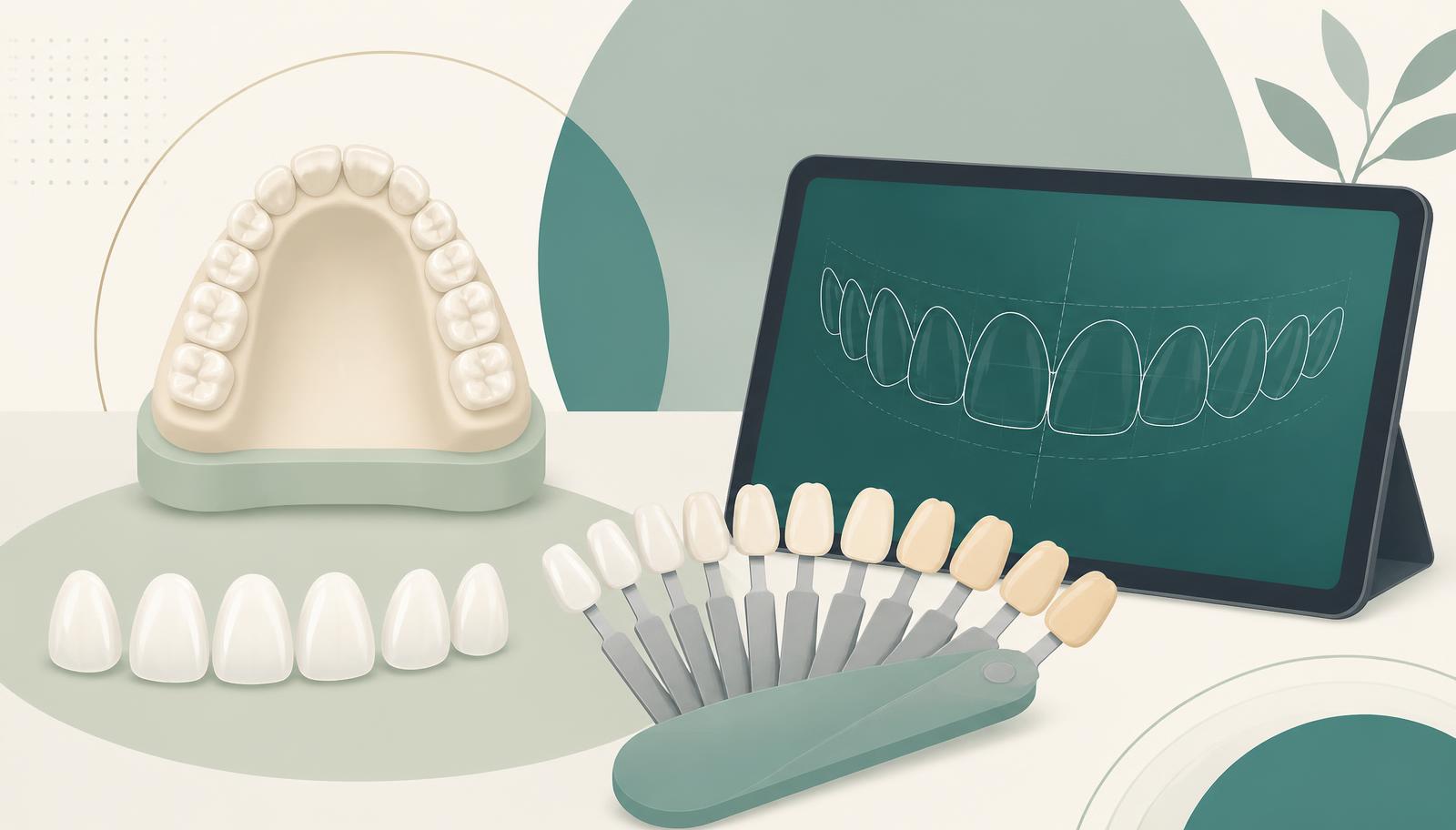
We plan proportions from your face: the midline, how much tooth shows at rest, the curve of the smile against the lower lip. The design is discussed with you and changed until it is right.
Step three: the trial smile
A temporary version of the design is placed over your teeth without any preparation. You see it, photograph it, live with it for an hour, and tell us what to change. Nothing irreversible has happened at this point.
Step four: doing less where possible
If crowding is the real problem, a short course of clear aligners can mean four veneers instead of ten. If shade is the real problem, whitening first can mean no veneers at all on the lower teeth. Removing healthy enamel that did not need removing cannot be undone.
What we do at Dental Oasis
The orthodontist and the restorative dentist plan the case together, and the specialist stays with you through each stage rather than handing you to software.
Ask for a written plan, or read our guide to veneers.