Skip to content

Bridge, implant or denture: replacing missing teeth

Dental Oasis Tirana · Medically reviewed by Dental Oasis clinical team · 9 min read

Last updated 9 September 2026

Dentist explaining tooth replacement options with a dental model to a patient at a clinic in Tirana, Albania

The short answer

An implant replaces the root and leaves neighbouring teeth untouched, a bridge borrows support from the teeth either side, and a denture rests on gum and is removable. Implants preserve bone and last longest; bridges are quicker; dentures suit many missing teeth or compromised health. Bone volume, the condition of adjacent teeth and how many teeth are missing decide which is appropriate.

Key takeaways

  • Bone under a gap shrinks within months and neighbouring teeth drift, so gaps get harder to treat over time.
  • An implant replaces the root, preserves bone and leaves adjacent teeth untouched.
  • A bridge is fast but permanently prepares the teeth either side and does not protect bone.
  • Dentures avoid surgery and suit multiple missing teeth; implant support adds stability.
  • Bone volume, the state of neighbouring teeth and available time decide the plan.
On this page

Why the gap matters even if it does not show

A missing tooth is not only cosmetic. The bone that held its root begins to shrink within months, the opposing tooth drifts down into the space, and the teeth either side tip towards it. Chewing load moves onto teeth that were not designed to carry it. The longer a gap is left, the fewer good options remain.

The three options
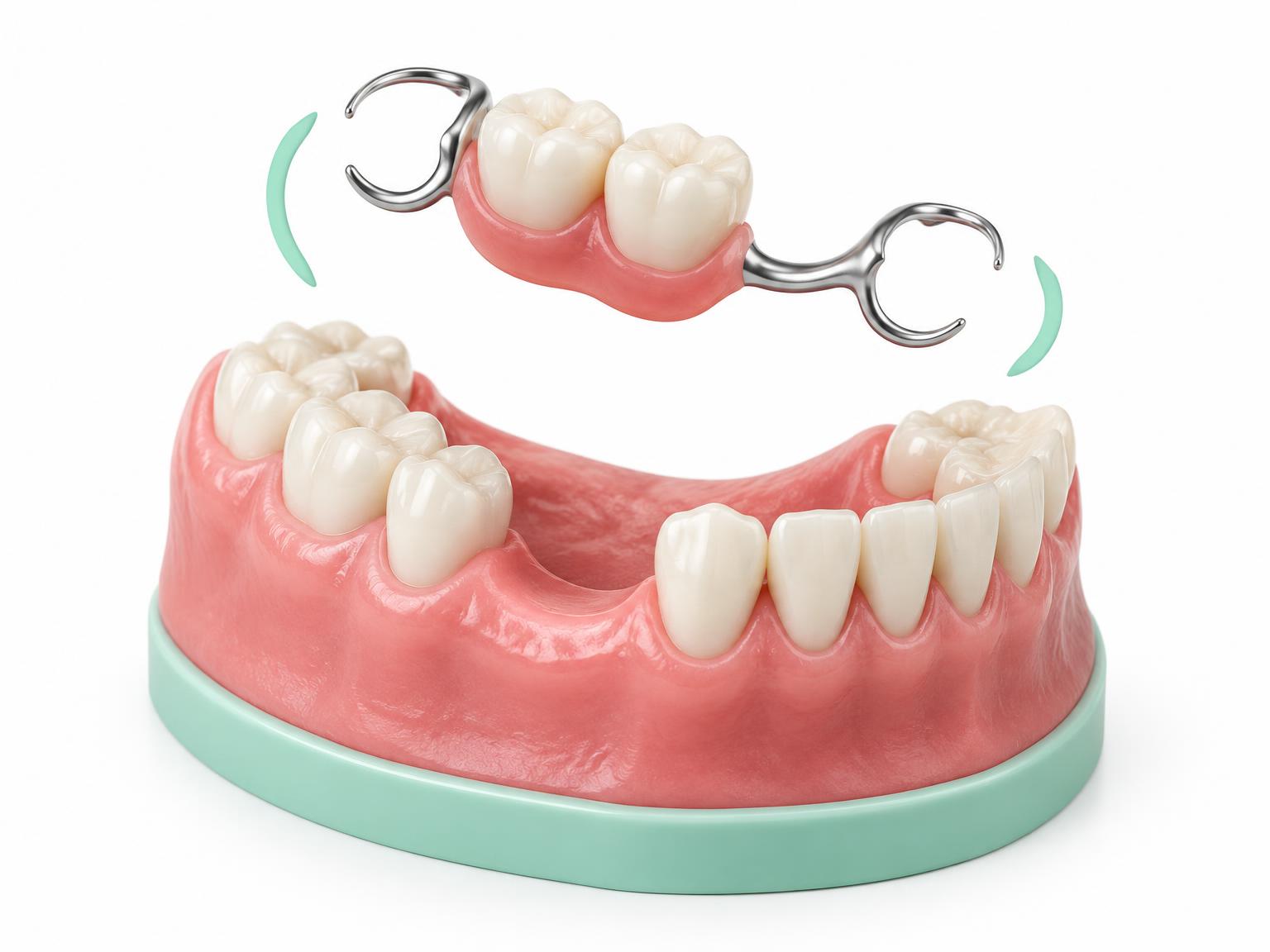
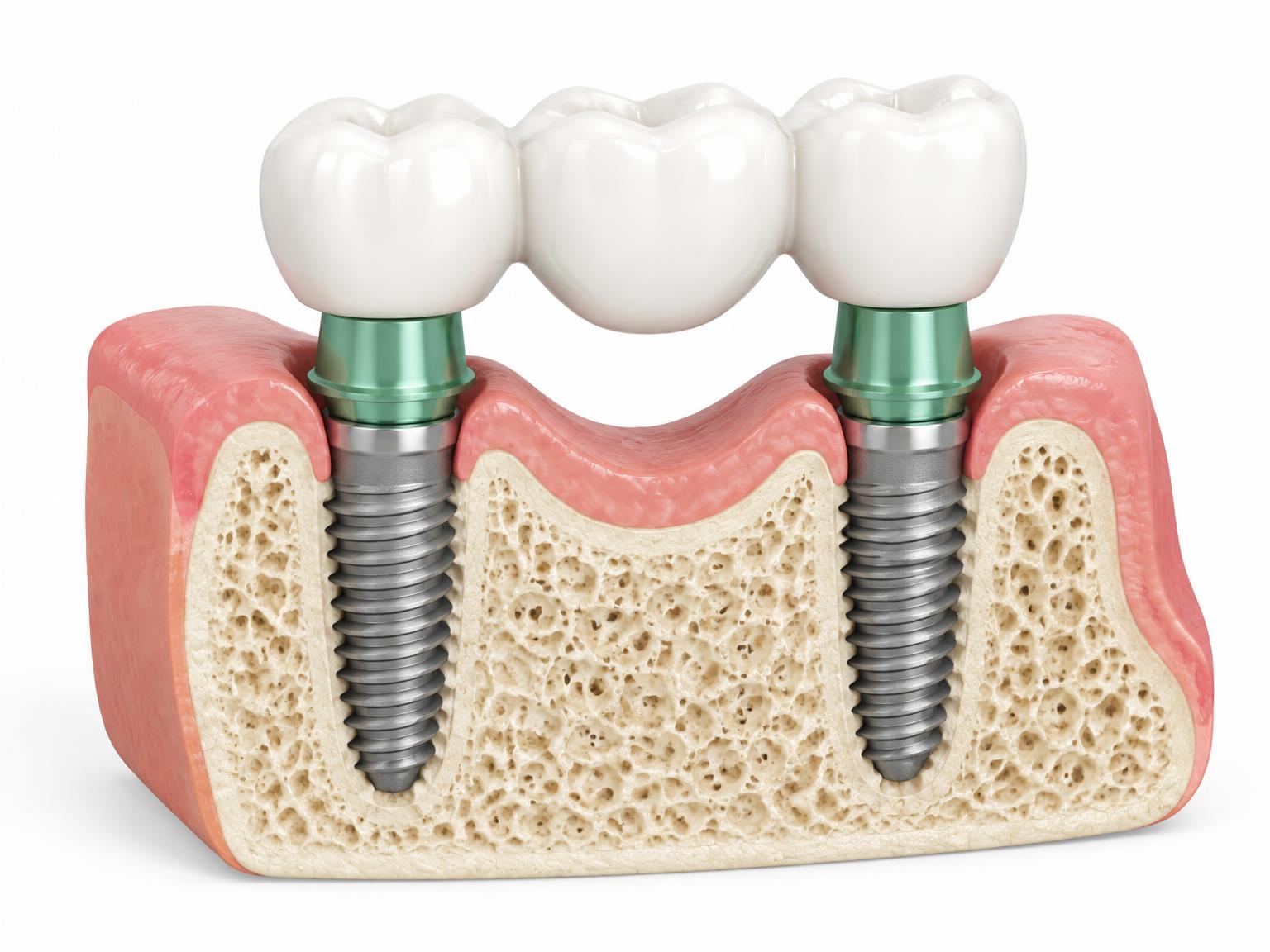
Dental models of a single implant crown, a three-unit bridge and a partial denture side by side
Three ways to fill the same gap, with very different effects on the bone.

Implant. A titanium post replaces the root and carries a crown. It is the only option that loads the bone and slows resorption, and it leaves the neighbouring teeth untouched. It needs enough bone, or a graft, and several months of healing. See single tooth implant.

Bridge. A dental bridge spans the gap using the teeth either side as supports. Those teeth are prepared, which is a permanent change; if they already carry large fillings or crowns, that cost is small, and if they are pristine it is significant. A bridge is fast, usually two visits, and does nothing to preserve the bone under the gap.

Denture. A removable partial or full denture replaces several teeth at once, needs no surgery and adapts easily. It transfers load to the gum, is less stable when chewing, and needs relining as the ridge shrinks. An implant-supported bridge or implant-retained denture is the middle ground: fewer implants, far more stability.

How the decision is actually made

  • How many teeth are missing, and where? One tooth between healthy neighbours is the classic implant case. A free-end gap with no back tooth cannot be bridged at all.
  • What condition are the adjacent teeth in? Already crowned teeth make a bridge sensible. Untouched teeth argue for an implant.
  • Is there enough bone? A CBCT scan answers this. Grafting is routine but adds time.
  • Do you smoke, and is gum disease controlled? Both change implant survival, and untreated gum disease has to be dealt with first either way.
  • How much time can you give it? A bridge finishes in days. An implant is months, though the surgery itself is one appointment.

Lifespan, realistically

Implants have the longest published survival of the three, with the crown on top being the part usually renewed after 10 to 15 years, see how long implants last. Conventional bridges commonly serve 10 to 15 years, with the supporting teeth being the usual point of failure. Dentures need relining every few years as the ridge changes shape.

If you are treating this abroad

Sequencing is what matters. An implant needs two trips; a bridge fits into one. Combining them, extraction and implant on the first visit, bridge or crown work completed on the second, is how most full plans at Dental Oasis Tirana are arranged. Ask for the plan in writing, with the implant system name and the warranty, before you book flights.

Frequently asked questions

Is an implant always better than a bridge?
Not always. An implant is usually the first choice because it preserves bone and spares the neighbouring teeth, but a bridge is sensible when those teeth already need crowns, or when bone or health rules out surgery.
Can a bridge replace a back tooth with nothing behind it?
No. A conventional bridge needs a supporting tooth at both ends. A free-end gap is restored with an implant or a partial denture.
How long can I leave a gap before deciding?
Bone loss is fastest in the first year and neighbouring teeth start moving within months, so a plan within the first six months keeps the most options open.
Are implant-supported dentures worth it?
For lower full dentures they change daily life the most: two to four implants stop the denture moving while chewing and speaking, without the cost of a full fixed arch.
Can all three be combined in one plan?
Yes, and complex cases usually are: implants where bone allows, a bridge where adjacent teeth already need crowns, and a partial denture as an interim step while implants heal.

Related treatments at our clinic

Related guides

Keep reading

About the author

Dental Oasis Tirana

Dental Oasis Tirana is a dental clinic in Tirana treating local and international patients for implants, zirconia prosthetics, cosmetic dentistry and oral surgery. Our articles are written by the clinical team and reviewed for accuracy before publication, with pricing and timelines that reflect how we actually treat cases.

View author profile

Medically reviewed by Dental Oasis clinical team

Last updated 09/09/2026

Have a question about your case?

Message us on WhatsApp and our Tirana team usually replies the same day.