
On this page
Introduction
Patients are often told they have "not enough bone" without being told why, or what the options are. Here is the plain version.
TLDR;
- Bone shrinks fastest in the first year after an extraction.
- Small defects are grafted at the same appointment as the implant.
- Large defects and sinus lifts are staged, with four to nine months of healing.
- A CBCT scan, not a flat X-ray, is what decides this.
- Staged cases mean three visits rather than two, planned around your travel.
Why bone disappears
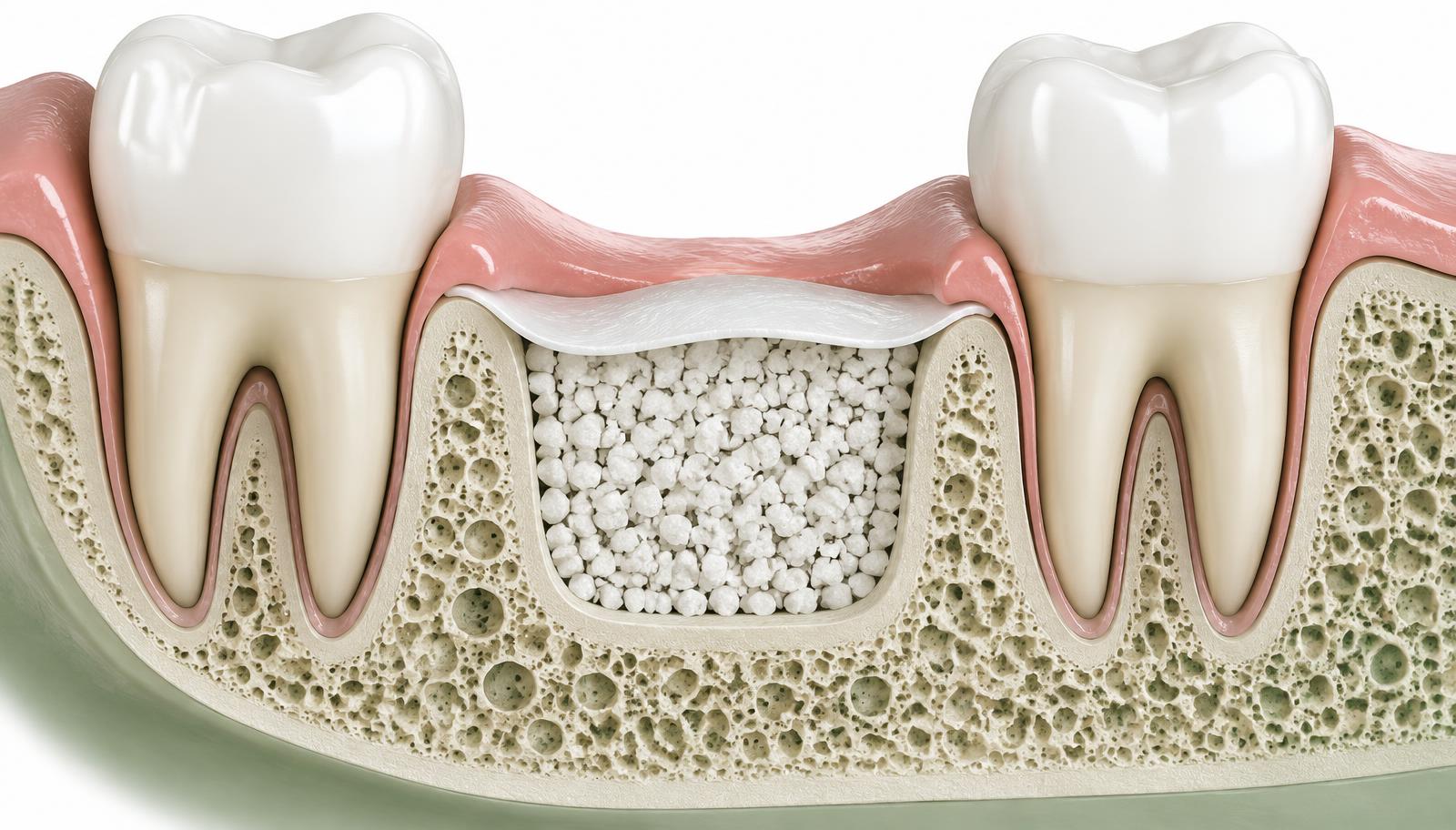
The bone around a tooth exists to support that tooth. Once the tooth is gone the body reabsorbs it, quickly at first, and long-term denture wearing accelerates the process. In the upper back jaw the sinus cavity also expands downwards into the space.
Grafting materials
Most cases use a xenograft, a sterilised mineral scaffold that your own bone grows into and gradually replaces, held in place by a collagen membrane. Your own bone chips can be added when more biological activity is wanted. The material is a framework; the healing is yours.
Sinus lift
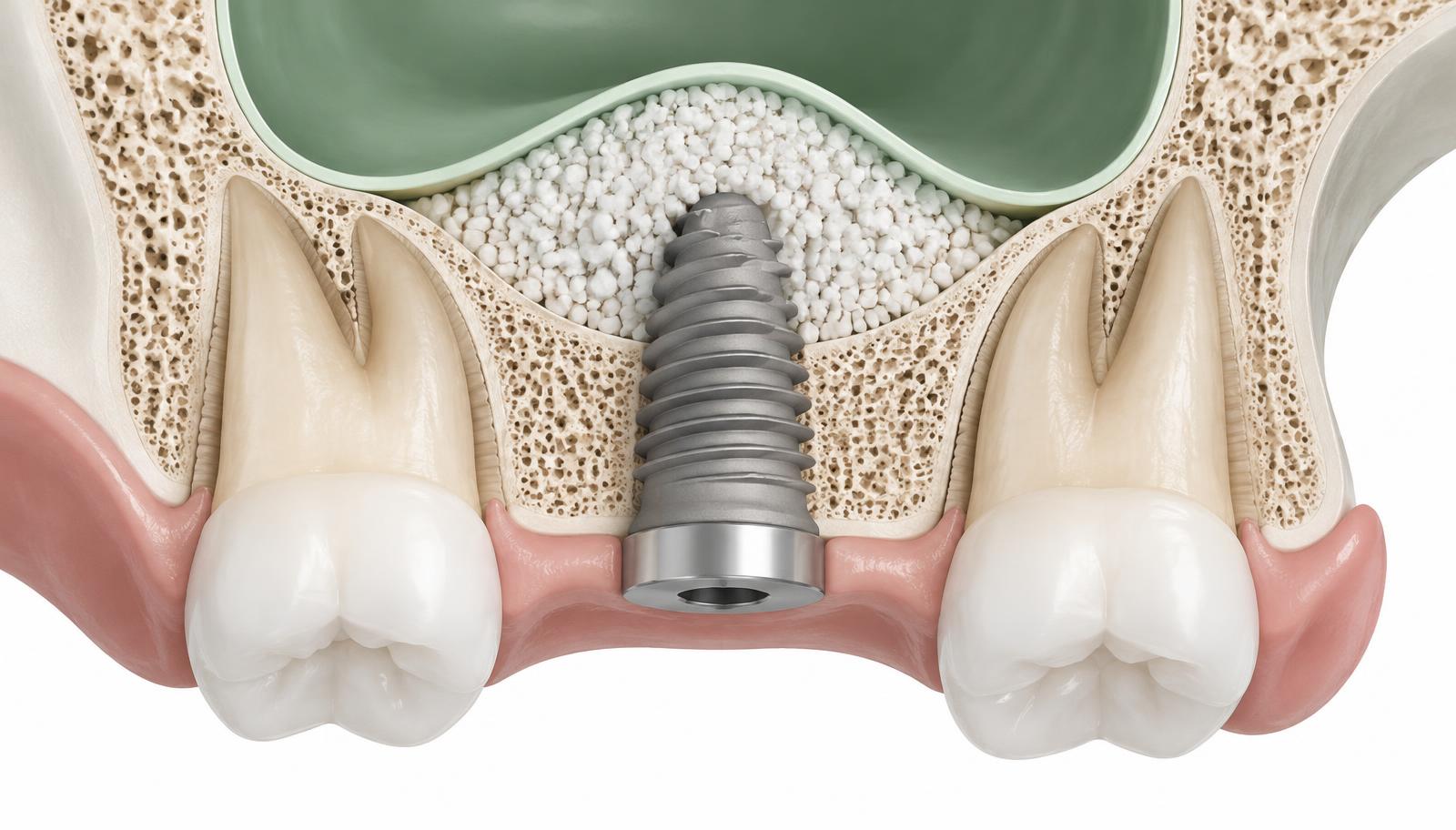
For upper molars, the sinus membrane is gently lifted and graft material placed underneath, creating height for the implant. A small lift can be done through the implant channel at the same visit. A large lift is done through a side window and healed for six to nine months.
Planning around travel
We tell you the number of visits and the intervals before you book anything. A staged case is not a complication; it is the difference between an implant that lasts and one that fails in year three.
What we do at Dental Oasis
Every implant plan starts with a CBCT scan read by the surgeon, and you get the plan in writing with the stages set out.
Ask for a written plan or read what to check before implants abroad.