
On this page
Introduction
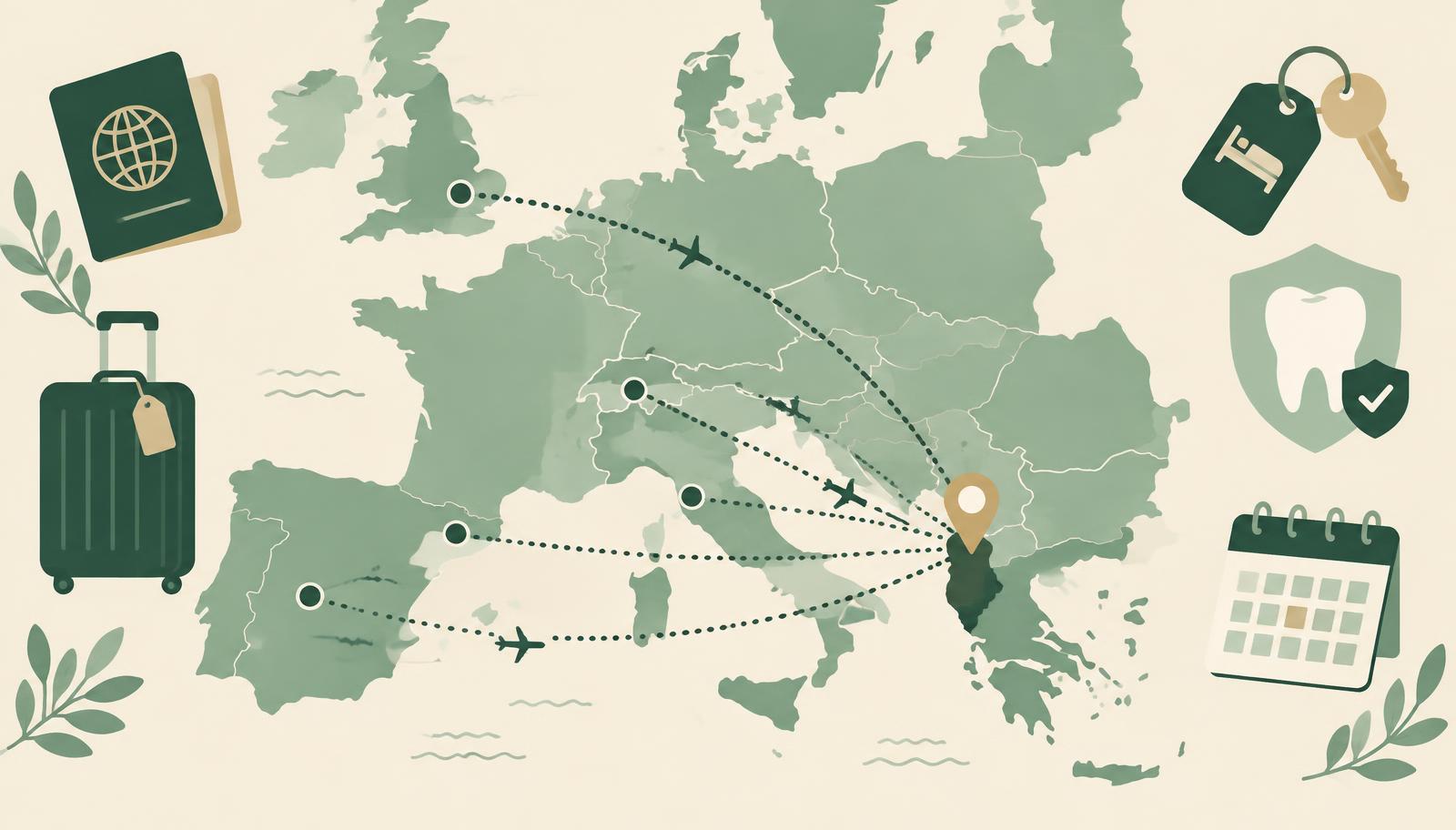
Most people who ask us about treatment in Tirana have already decided the dentistry matters more than the trip. Then the practical questions arrive: how do I get there, is it safe, where do I sleep, what if something goes wrong. This guide answers them in the order patients usually ask.
TLDR;
- Tirana is a direct flight of about two to three hours from several UK airports.
- UK citizens need a valid passport; no visa is required for short visits.
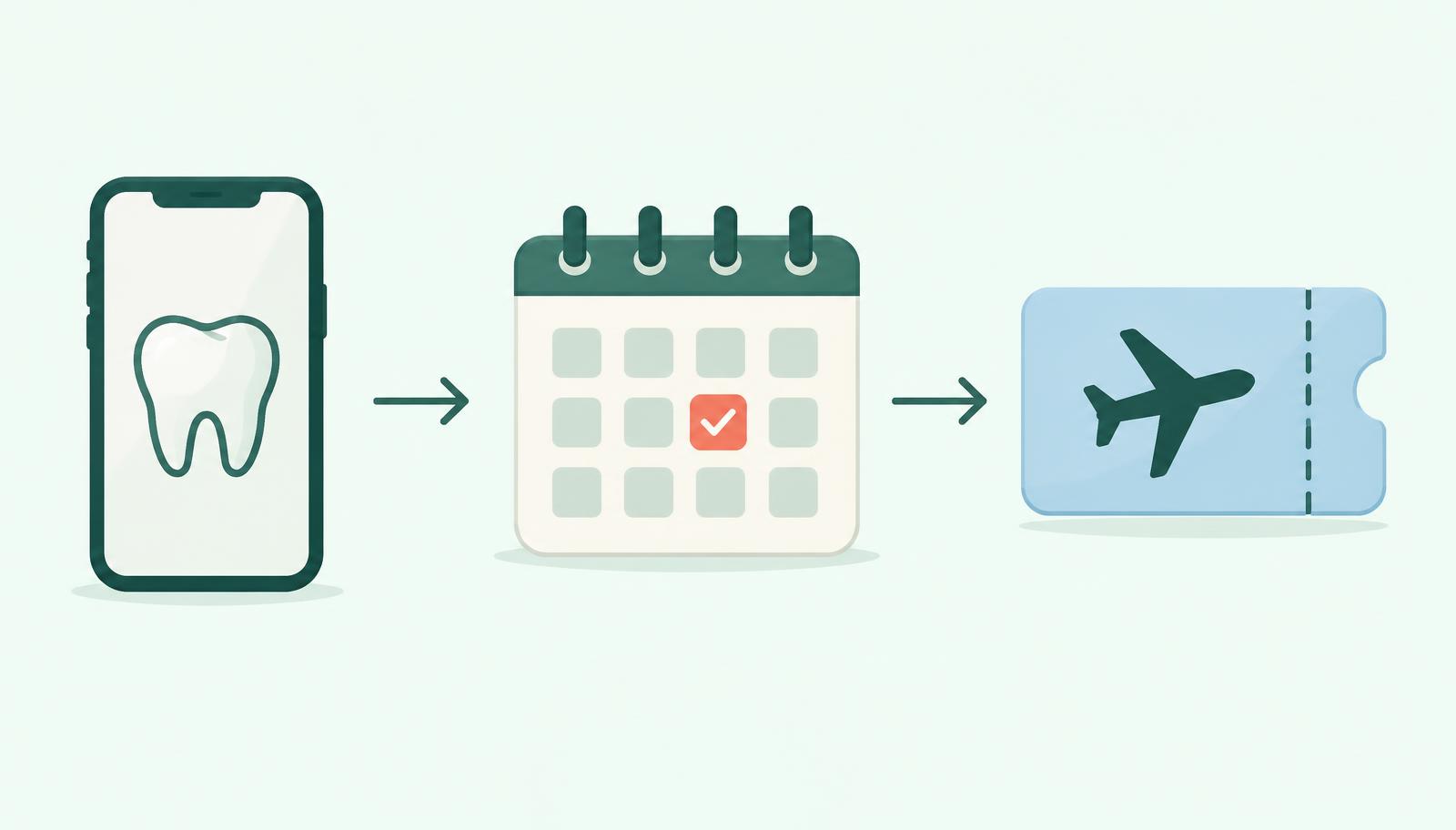
- We plan the appointments first, then you book flights around them.
- Airport pickup and help with a hotel near the clinic are part of the trip.
- Standard travel insurance usually excludes planned treatment, so check the wording.
- We do not publish prices. You receive a written, costed plan privately by email.
Getting there: direct flights from the UK
Tirana International Airport has direct routes from London airports and seasonal or year-round routes from regional airports such as Manchester. Airlines and timetables change by season, so check current schedules before booking. The flight is short enough that a long weekend works for a consultation.
Book your flights only after we confirm the appointment plan. Implant surgery, crown fitting and reviews follow a clinical sequence, and the dates come from that sequence.
Entry requirements
British citizens can visit Albania without a visa for short stays. Carry a passport valid for the length of your trip and check the current UK government travel advice before you go, as rules can change.
Where to stay and getting around
The clinic is in central Tirana. We suggest hotels or apartments within a short walk or taxi ride, so review appointments are easy on days when you may feel tired. We arrange pickup from the airport on arrival. Taxis are inexpensive and the city centre is walkable.
The local currency is the lek. Cards are widely accepted in hotels and restaurants, and cash machines are easy to find.
UK packing essentials: plugs and mobile data
Bring a UK-to-European travel plug adapter. Albania uses Type C and Type F sockets with round pins, rather than the UK's three-pin Type G sockets. Choose an adapter suitable for your appliance, including an earth connection where required. Albania's supply is 230 V, 50 Hz; check the rating on your charger or appliance. A plug adapter changes the connection, not the voltage. See Electrical Safety First's Albania adapter advice.
Check Albania roaming with your mobile provider before departure. Confirm that your plan works in Albania, the charges for data, calls and texts, and whether international roaming needs activating on your account. Do not assume a European roaming bundle includes Albania. If you choose to use your UK SIM for data, enable data roaming only after confirming the cover and charges; a spending limit can help avoid surprises. See Ofcom's guidance on using your mobile abroad.
Consider arranging a travel eSIM before you arrive. Check that your phone supports eSIM, is unlocked and that the package explicitly covers Albania. Install it while you have a reliable internet connection and follow the provider's activation instructions, checking when its validity period starts. Some travel eSIMs are data-only, so check separately if you need ordinary calls or SMS. If using an eSIM for data, select it as your mobile-data line and turn off data roaming on your UK SIM to avoid unintended charges. Download your appointment details and offline maps before travelling.
Is Tirana safe?
Tirana is a lively, welcoming European capital, and visitors generally find it relaxed and easy to navigate. Use the same common sense you would in any city. The more important safety question is clinical: who plans your treatment, what imaging is done and what you take home afterwards. Our guide on what to check before booking implants abroad covers that in detail.
How the treatment trip is planned
- Before you travel: send photos and, if you have one, a recent X-ray on WhatsApp or by email. We reply with a provisional plan and the number of trips it needs.
- Day one: examination, CBCT 3D scan and a consultation with the clinician who will treat you. The final written plan is confirmed before any treatment starts.
- Treatment days: veneers and crowns are normally finished in one trip of about a week. Implants need two trips, with three to six months of healing between them.
- Before you fly home: a review appointment, and your treatment record, radiographs, material references, guarantee and written aftercare.
See what our dental packages for UK patients include, or read about dental implants abroad.
Travel and dental insurance
Most standard travel policies exclude treatment you travel *for*. Some specialist medical travel policies cover complications after planned treatment abroad. Read the wording, ask the insurer directly and keep your clinic documents to hand.
Paying and paperwork
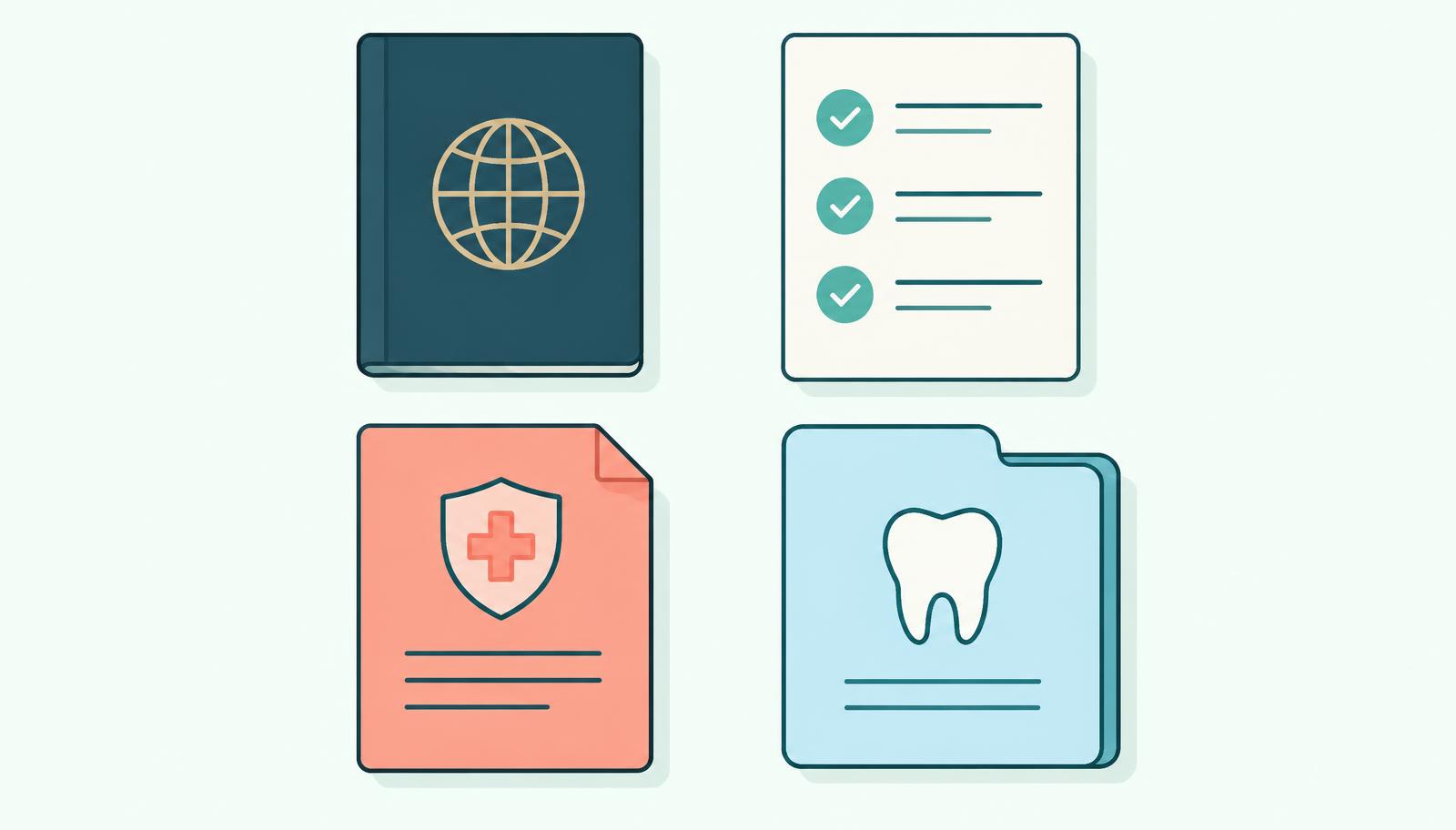
We do not publish treatment prices. After the consultation you receive a written, itemised plan by email, so you know what is agreed before you commit. Keep the final invoice and treatment record: your own dentist will need them for any future care.
Next step
Send us a photo and tell us where you are flying from. We will reply with a private written plan and suggested travel dates. Book a free consultation.